

Beneath what was once the harbor at Wenzhou, on China’s southeastern coast, archaeologists excavating a cluster of sunken Song dynasty shipwrecks in 2024 found the routine cargo of maritime trade: crates of porcelain, the stones of olives and lychees, kiwifruit seeds, grape pips, and, mixed into the same waterlogged mud, four flattened seeds of melon. Two of those seeds held enough surviving DNA to sequence. The fruit their genomes describe bears almost no resemblance to what sits in a produce aisle today.
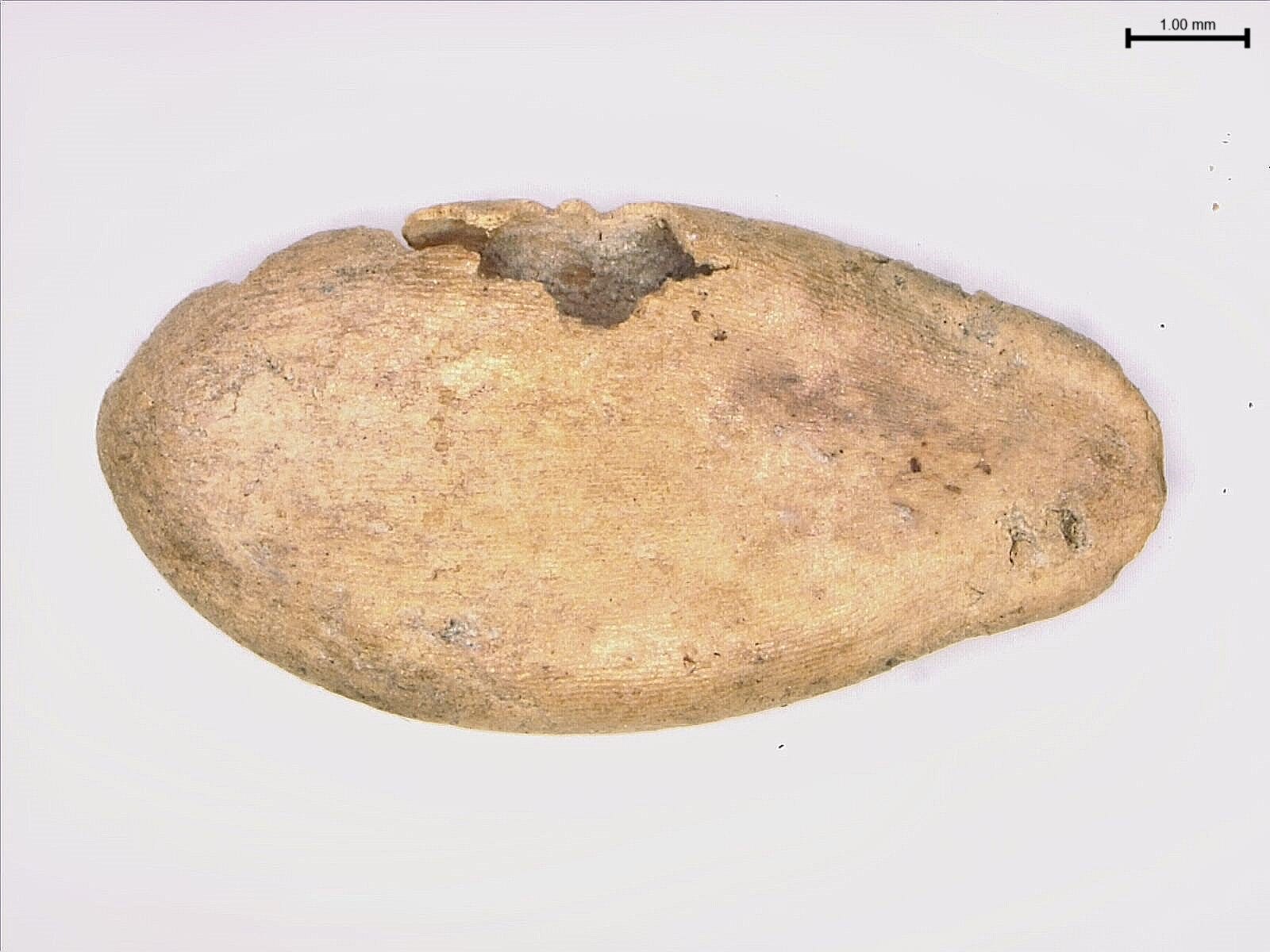
Melon’s standing in Chinese culture runs deeper than agriculture. Its abundance of seeds made it, for centuries, a folk emblem of fertility and continuity, and Song-era potters shaped whole lines of celadon ware after its rounded body and pale flesh. It would be easy to assume that a fruit this embedded in the culture, this tied up with the idea of abundance, tasted the way melon tastes now. The two Gugang seeds, cataloged in the new study as GG1 and GG4, complicate that assumption from two directions at once: neither genome carries the markers of a sweet dessert fruit, and neither confirms that China ever bred its own melon independently in the first place.
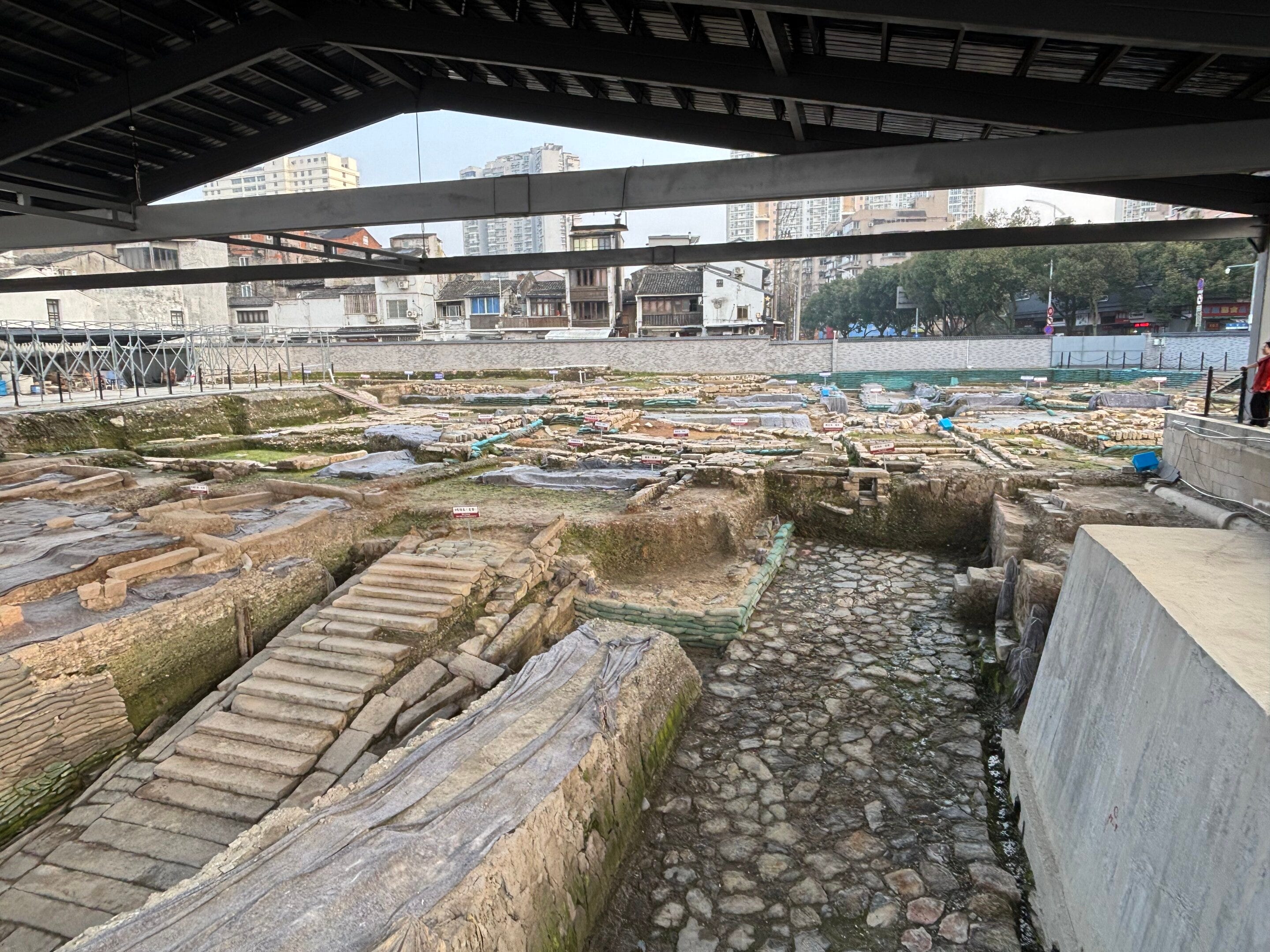
The seeds come from Shuomen Gugang, a medieval port that connected inland China to trade networks across the western Pacific and Indian Ocean during the Song dynasty (960 to 1279 CE). A companion seed from the same waterlogged layer was radiocarbon dated directly, placing the deposit at roughly 1020 to 1150 CE. The analysis, carried out by an international team anchored at Durham University in the UK and Washington University in St. Louis, was published this month in the Proceedings of the National Academy of Sciences.1
Cucumis melo is not a small crop. Global cultivation passed 22 million tons in 2024, and yet its route into East Asia has been argued over for more than a decade, with the argument reversing at least once already. Susanne Renner, a biologist at Washington University in St. Louis and one of the study’s senior authors, has spent more than twenty-five years working on the genus. Renner has said that early researchers assumed an African origin for melon simply because so many wild relatives of the genus Cucumis grow there, and diversity was long read as a signal of origin. Her own biogeographic work, drawing on roughly one hundred Cucumis samples collected across Africa, Australia, and Asia, pointed somewhere else: toward a set of overlooked relatives scattered around the Indian Ocean and Australia, and toward Asia, not Africa, as melon’s actual homeland.
Genomic surveys since then have converged on three known domestication events for melon: once in Northeast Africa, and twice, independently, in India. China has always been the loose thread. Archaeobotanists working the lower Yangtze have recovered Cucumis seeds spanning the Neolithic through the Bronze Age, a run of nearly seven thousand years, and that long record has kept alive the possibility of a fourth domestication, centered in China and separate from the Indian and African lineages. The trouble is that Cucumis seeds are notoriously hard to sort by eye. Domesticated, feral, and wild seeds overlap in shape, and centuries underground blur what differences exist. Nobody was going to settle this by measuring seed outlines under a microscope.
The genome answers what the seed shape could not. Both GG1 and GG4 cluster with the agrestis lineage, the broad East Asian branch of cultivated melon still grown across China today, rather than with any separate, unsampled group that would mark an independent Chinese domestication. That points toward introduction from the existing Asian domestication pool, most likely South Asia, rather than a homegrown Chinese origin. The authors stop short of closing the door entirely. No wild Cucumis melo population has ever been confirmed inside China, and an extinct or unsampled progenitor can’t be ruled out from two low-coverage genomes alone. The relationship between these Song-era seeds and the far older Neolithic material from the same region remains, in the paper’s own phrasing, unresolved.
Xinyi Liu, an archaeologist in the anthropology department at Washington University in St. Louis and another of the study’s authors, has pointed to two plausible corridors for that introduction: a northern route along the Silk Road, skirting the Tibetan Plateau, or a southern one, the so-called Tea Horse Road, threading through the mountains of southwest China and the Himalayas toward South and Southeast Asia. The archaeological record favors the south. Morphologically identified melon seeds turn up in a tomb at Wuwangdui dated to 238 BCE, just before the Han dynasty began, roughly nine centuries before comparable remains appear at a northern site closer to 700 CE. Liu has argued that gap makes a southern introduction the stronger candidate. If that holds, melon may have reached China twice: once overland, centuries before the Han, and again by sea, arriving at ports like Gugang alongside the same tropical cargo, lychee, kiwifruit, grape, and olive, that turned up in the shipwrecks themselves.


