

Sometime between the tenth and eleventh centuries CE, a man over the age of 45 was buried in the entrance chamber of one of the oldest and largest monuments in Europe. He had no grave goods. He lay on his right side. His head pointed toward the interior of a Neolithic dolmen that had already stood for five millennia when they put him in the ground.
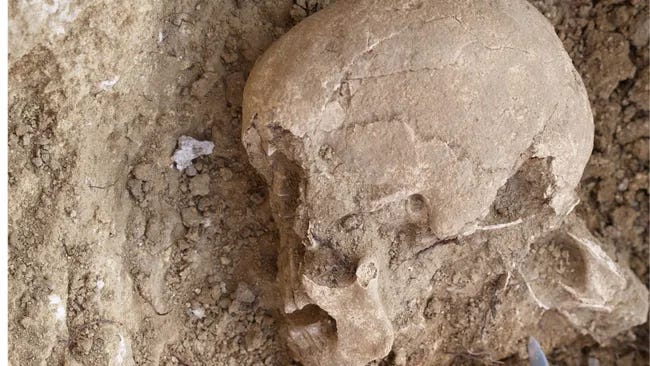
He was not the first. About 190 years earlier, another man, also past 45, had been placed in the same atrium in almost identical fashion. Same position. Same orientation. Same absence of anything accompanying him into the earth.
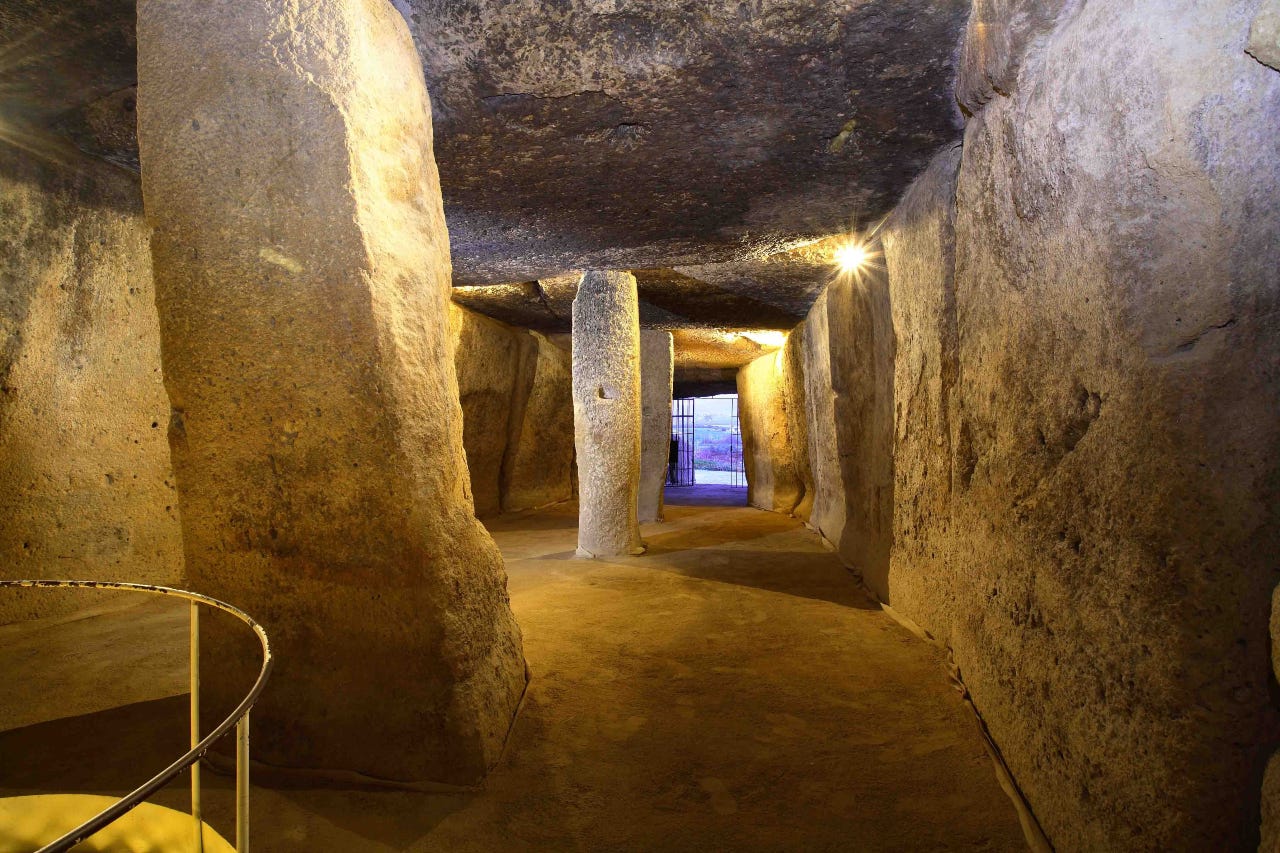
The Dolmen de Menga, outside Antequera in Andalusia, was built during the first half of the fourth millennium BCE. It is a massive megalithic passage grave, a UNESCO World Heritage site, and for most of its long existence, it has attracted people back to it in ways that are not straightforward to explain. These two medieval burials are part of that pattern.
A team led by Marina Silva, Leonardo García Sanjuán, and Martin Richards has now published1 a genetic and historical analysis of the pair, combining ancient DNA work, radiocarbon dating, and archaeological context to ask: who were these men, and what does their presence there mean?
The answer to the first question turns out to be nuanced. The answer to the second is still genuinely open.


