
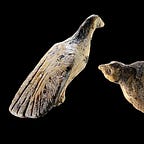
Somebody sat in a cave in the Swabian Jura 40,000 years ago and carved a bird small enough to lose in a coat pocket. Not a rough approximation of a bird. A specific one, with a beak angled a particular way, with feather markings incised into a strip of mammoth ivory barely two centimeters long. Whoever made it was working at a scale where a single slip of the tool would have ruined hours of effort, and they were doing it during the last ice age, using stone blades, by firelight or daylight filtering into a cave mouth in what’s now southwestern Germany.
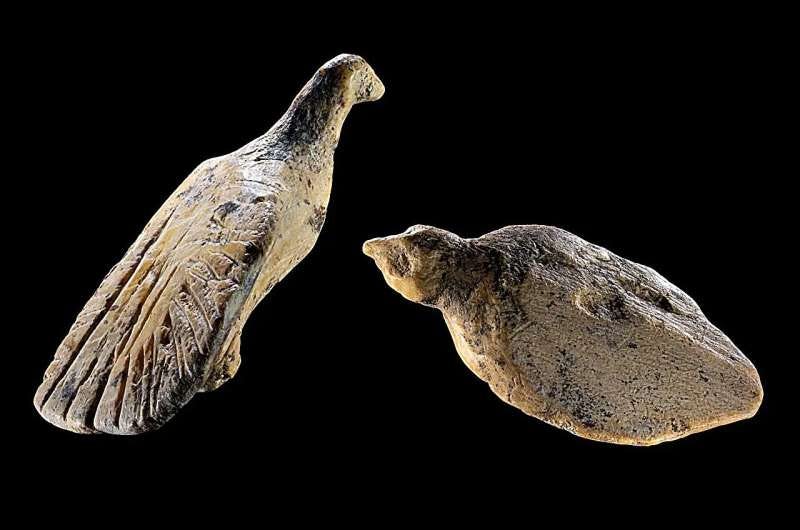
Archaeologists from the University of Tübingen recovered two such figurines at Hohle Fels Cave in 2025, found1 about a meter and a half apart in the same archaeological layer. Both are carved from mammoth ivory. Both come from the Aurignacian, the technocultural period associated with the first modern humans to settle the Upper Danube region, and the layers at Hohle Fels have already produced some of the oldest figurative art known anywhere. The site’s reputation rests partly on the Venus of Hohle Fels and on flutes made from bird bone and ivory that count among the earliest musical instruments ever found. Now add two birds to the list, and these are unlike anything the site had produced before, not because of what they depict but because of how small they are.
At roughly 2 x 1 x 0.5 centimeters, they’re a fraction of the size typical for figurines from this period, which usually run three to nine centimeters. One weighs 1.3 grams. The other, incomplete, weighs 0.7. You could balance either on a fingertip and barely feel it. And yet the detail holds up under that constraint. The complete figurine, showing a bird settled low with its body pressed down, has clearly rendered eyes. The other, missing part of its body but preserving a full head and outstretched wings, has a distinctive beak and lines cut to suggest feathering. Nicholas Conard, who directs the excavations, put it plainly: this isn’t stylization. The carver recorded specific, deliberate features, the kind that let you ask what species of bird this is and what it’s doing, rather than just registering that it’s a bird at all.


