
In a buried layer of decomposing seal skin beneath modern Nuuk, researchers found that a single bacterial species made up nearly half of all the classifiable DNA in the sample. The species was Clostridium perfringens, a common cause of food poisoning and, in less common circumstances, something far worse. The layer was roughly two centuries old. It had been sitting there, frozen and largely undisturbed, since before Greenland had much of a written record at all.
This is the kind of detail that makes middens interesting to archaeologists in the first place. A midden is just a trash heap, but a very informative one: bones, shells, broken tools, and waste accumulate in layers, and each layer is a snapshot of what people ate, what animals they kept, and how they lived. Greenland has middens spanning roughly 4,500 years, left behind by successive and largely unrelated populations: Paleo-Inuit cultures arriving from North America starting around 2,500 BCE, Norse settlers who brought livestock farming with them from the 10th century onward, and Danish colonists from 1721. Each group dumped its waste in roughly the same kinds of places, and the cold did the rest. Permafrost is an excellent preservative.
What’s changing is the permafrost itself. The Arctic is warming nearly four times faster than the global average, and the layer of frozen ground that has kept these deposits sealed for centuries is thawing and eroding. This isn’t a hypothetical concern. In 2016, a thawing patch of permafrost on Russia’s Yamal Peninsula is believed to have released anthrax spores that had been dormant for decades, killing over 2,000 reindeer and at least one person. Researchers working in Siberia have also recovered viruses from permafrost still capable of infecting amoebae after tens of thousands of years frozen. Against that backdrop, a question that sounds almost like science fiction becomes a reasonable one to ask: are Greenland’s ancient trash heaps sitting on something similar?
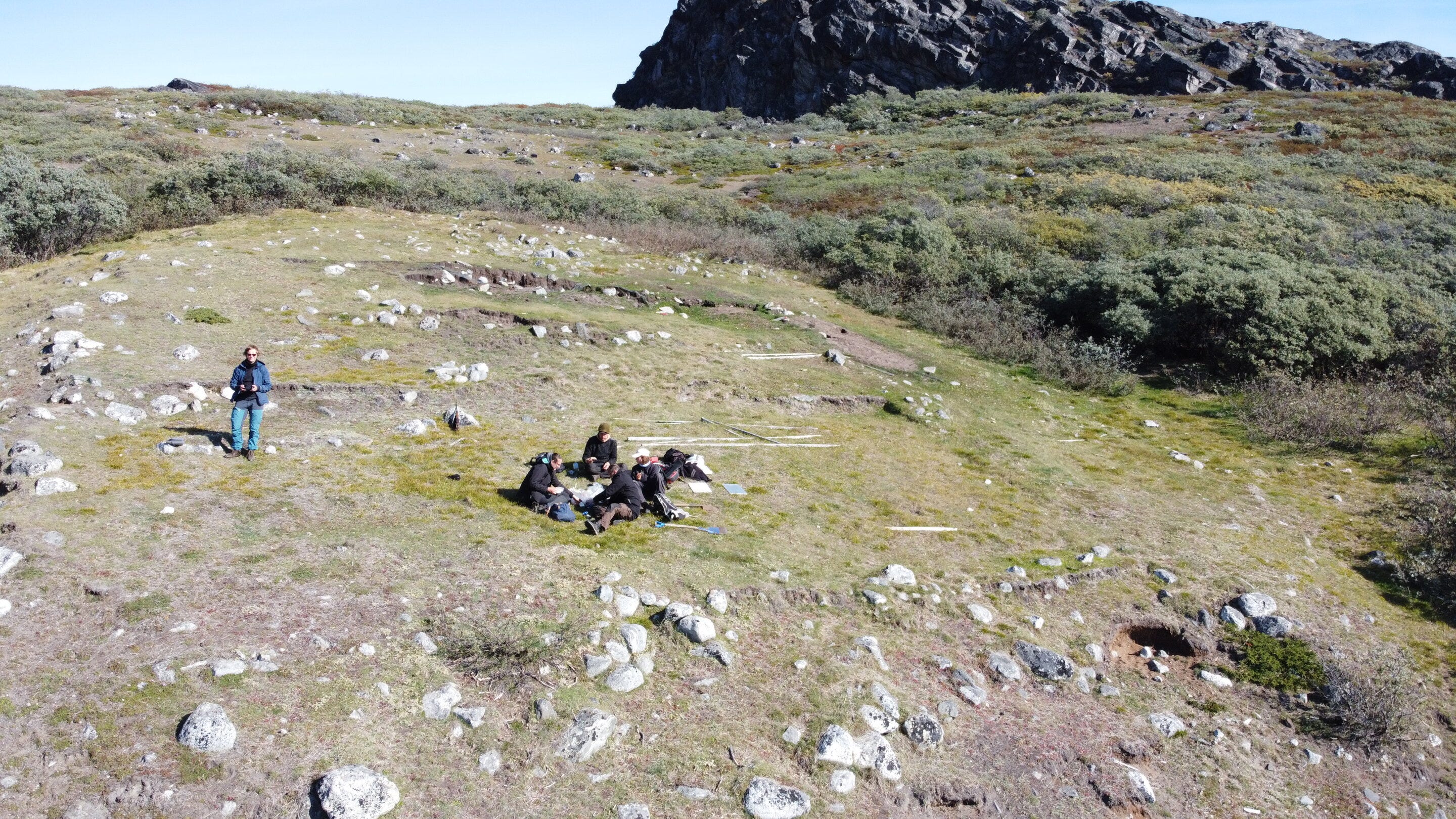
A team led by researchers at the University of Copenhagen and the National Food Institute at the Technical University of Denmark set out to answer that, not by guessing, but by sequencing. Between 2018 and 2020 they collected 78 samples from middens at five sites, Paleo-Inuit deposits at Qajaa and Sermermiut, Norse middens at Kapisilit, and an early colonial midden at Nuuk, and compared them against 143 soil samples from the surrounding, undisturbed landscape. Using metagenomic sequencing, they reconstructed1 entire bacterial communities directly from the DNA in the soil, without needing to culture anything in a lab.


