
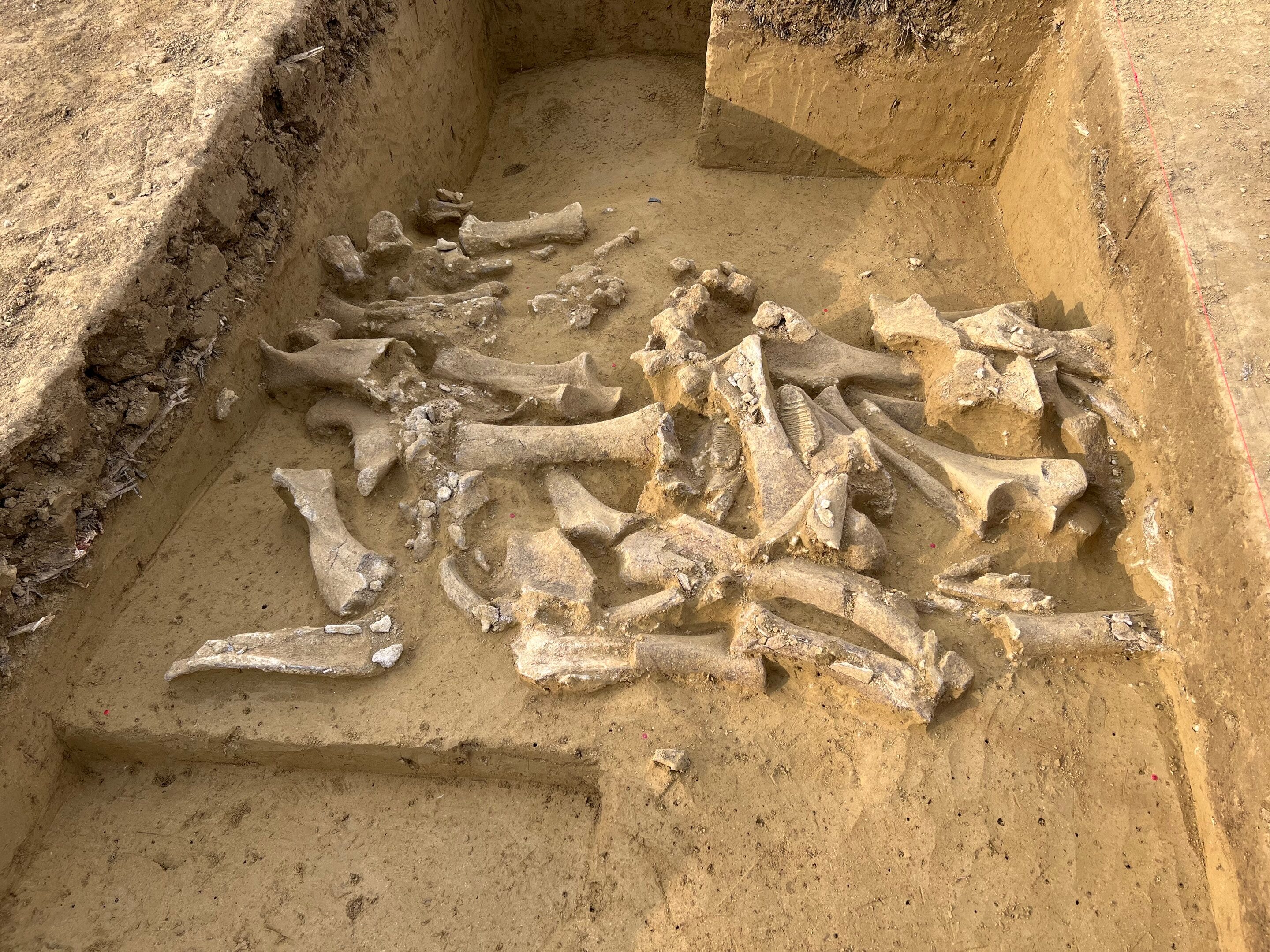
Bones don’t come with a note explaining how they got there. That’s the problem that has dogged mammoth bone accumulations for decades: the huge piles of skeletal material found at sites like Kraków Spadzista in Poland or Dolní Věstonice in the Czech Republic, sometimes representing dozens or even over a hundred individuals, could be the leftovers of human hunting and butchery, or they could be a geological accident. A sinkhole. An alluvial deposit. A place where mammoths simply kept dying for reasons that had nothing to do with people.
Cut marks help. Embedded projectile points help more. But cut marks and stone points get you evidence at the level of individual bones, not entire assemblages, and taphonomists have spent a long time arguing about whether the marks they can see are frequent enough, and clear enough, to settle the question definitively for a whole site.
A new approach1 sidesteps the argument almost entirely, and it does it by asking a different question: not “was this bone cut,” but “was this animal male or female.”


