

Salmonidae are cold-water fish. They don’t live in Osaka Bay, and they never have. Their natural range is far to the north, in the rivers and cold coastal waters of Hokkaido and the Sea of Japan coast. So finding salmon proteins in the dental calculus of commoners buried in a premodern Osaka cemetery is not, on the surface, a finding about diet. It’s a finding about a supply chain.
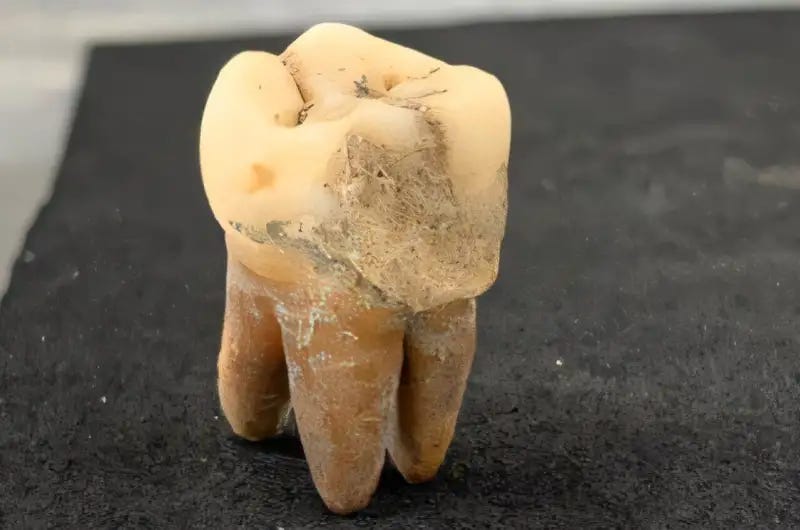
Dental calculus is mineralized plaque, the hardened biofilm that accumulates on teeth during a person’s lifetime. As the plaque mineralizes, it traps fragments of whatever passes through the mouth. Proteins from food get locked into the calcified matrix and, under the right conditions, survive for centuries. The method for extracting and identifying them involves dissolving the calculus, running the resulting peptides through a mass spectrometer, and matching the sequences against a reference database. It’s called paleoproteomics, and its applications to diet reconstruction have so far concentrated heavily on European and Central Asian populations, with dairy consumption as the main focus. A 2020 study1 by Sawafuji and colleagues used a related technique, ancient DNA metabarcoding, on dental calculus from Edo-period commoners in Tokyo, and identified plant-based foods along with traces of a Southeast Asian plant imported as medicine. But DNA methods are better suited to plant material; proteins are more comprehensive, particularly for animal-derived foods like fish.
This study,2 led by Yoko Uchida-Fukuhara and Takumi Tsutaya of SOKENDAI (the Graduate University for Advanced Studies), applies proteomic analysis to Edo-period Japan, to eight people buried in a commoner cemetery in what is now the heart of central Osaka.
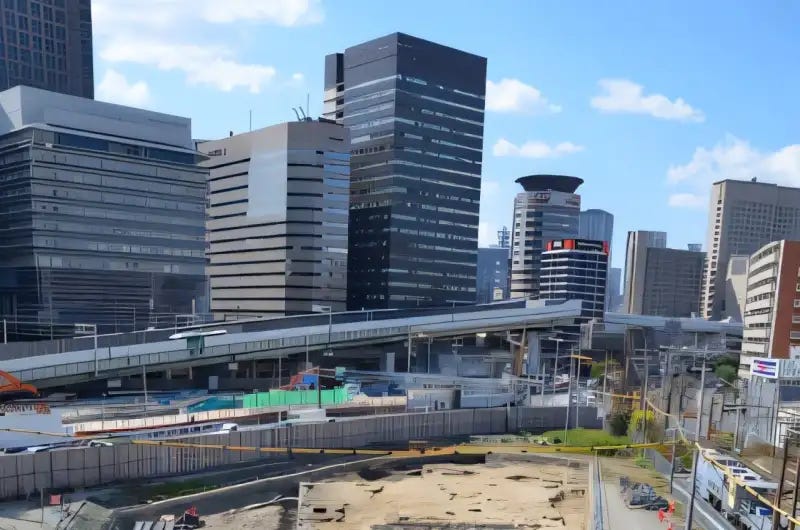
Their remains came from the Ofuka-cho site, more commonly known as the Umeda Cemetery, which sits beneath the area near Umeda Station. During the Edo period (1603-1868), this was one of seven designated cemeteries for the common people of Osaka. Premodern Osaka cremated most of its dead; inhumation was the minority practice, but thousands of inhumation burials were recovered during excavations in 2016-2017 and 2019. The eight individuals analyzed here came from densely clustered burial areas, excavated in 2019, and appear to have been interred within a relatively short span of time based on their stratigraphic positions. All date to the Edo period.
The team first ran carbon and nitrogen stable isotope analysis on bone collagen, which is the standard starting point for dietary reconstruction. Seven individuals yielded usable results; one was excluded due to poor collagen preservation. Their isotope ratios fell within the expected range for urban premodern Japanese commoners: a diet based on C3 terrestrial plants and marine resources. Useful framing, but not much more. Isotope ratios can tell you that someone ate marine fish; they cannot tell you which fish, or how it was obtained, or whether specific taxa were accessible across social groups. That’s where the dental calculus comes in.


