

For a long time, if you wanted to know what the ancient Maya ate, you had to ask the rich ones. Skeletons from Tikal, Calakmul, Caracol, palace burials with jade and painted vessels. That bias made sense practically. Elite tombs get excavated first, get funded, get published. But it left a strange gap in the record: we knew a lot about how kings and nobles ate and almost nothing about everyone else, despite commoners making up the overwhelming majority of any Classic Maya population.
A new study in PLOS One1 fills part of that gap by going somewhere unglamorous. Southeastern Petén, in northern Guatemala, was never home to a single dominant city. It was a patchwork of smaller, loosely bounded polities, more than 400 documented sites scattered across mountains, river basins, and savanna, none of them centralized the way Tikal or Calakmul were. A team led by Gloria Ivonne Hernández Bolio sampled bone and teeth from 57 individuals across these sites, almost entirely from non-elite burials, and ran them through stable isotope analysis to reconstruct what these people were actually putting in their bodies
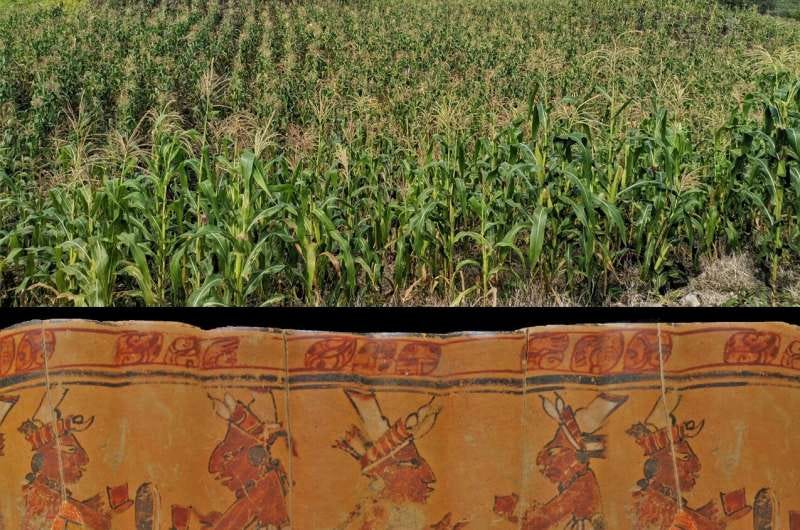
The short answer: maize, a lot of it, for centuries, without much variation by wealth or sex, and without the dietary shifts that show up elsewhere in the Maya world when things start to fall apart.


