

The Myth of the Level Playing Field
Anthropology has long been haunted by an alluring idea: somewhere out there, or sometime back then, humans lived in perfect balance. No chiefs issuing orders. No one hoarding meat or prestige. Just small groups of Homo sapiens moving through the landscape with a relaxed indifference to hierarchy.
This portrait of an egalitarian past, a kind of prehistoric moral Eden, has shaped popular imagination ever since early ethnographers described foragers who seemed to live free from the frictions of class and power that define industrial societies.
But a new synthesis by anthropologists Duncan Stibbard-Hawkes and Christopher von Rueden argues that this romantic picture was never quite true. Their study, published in Behavioral and Brain Sciences,1 examines decades of ethnographic and quantitative research on societies often labeled “egalitarian,” from the Tanzanian Hadza to the Batek of the Malay Peninsula and the Kalahari!Kung. What they find is not a failure of egalitarianism, but a fundamental misdefinition of it.
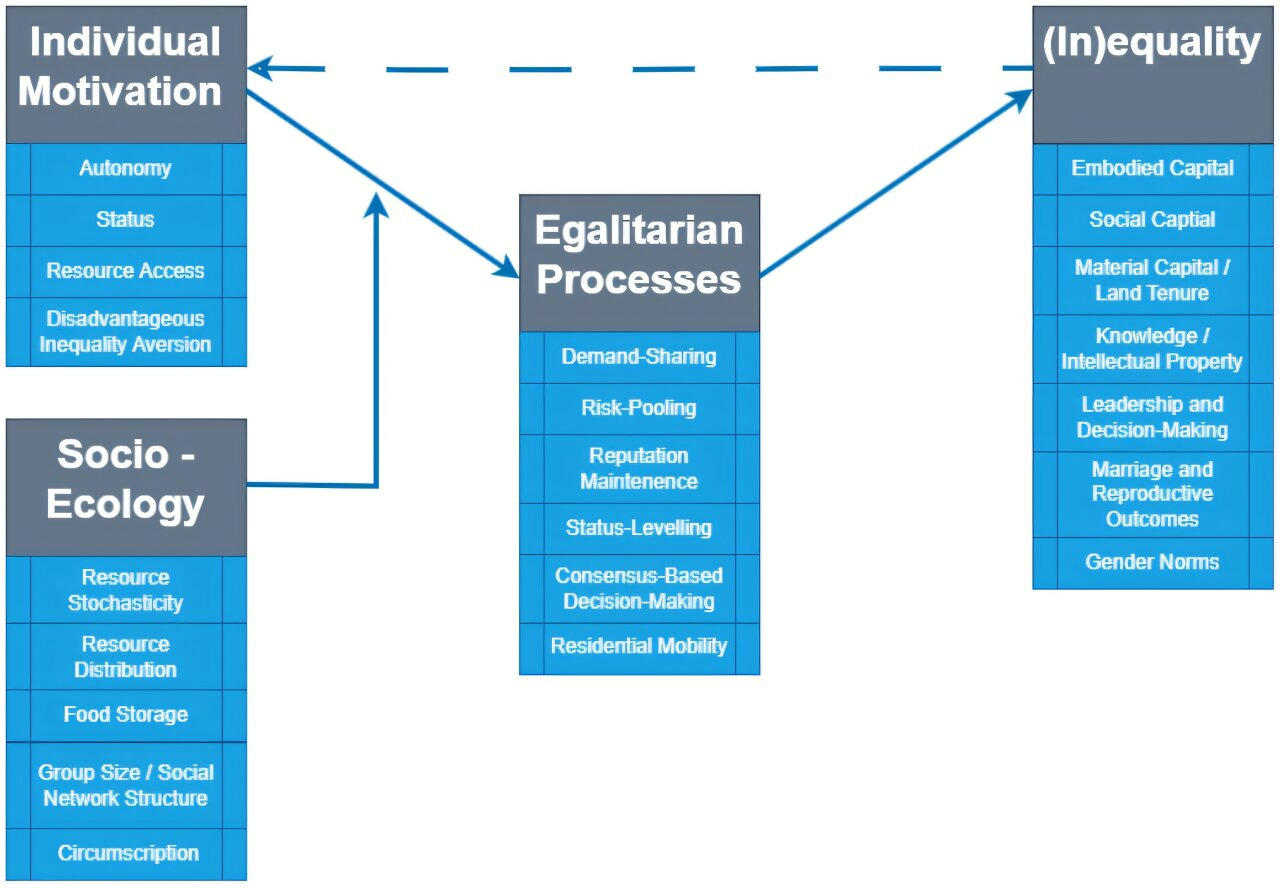
The key claim is simple: even the most egalitarian human societies contain structured inequality. And rather than stemming from altruism or moral purity, egalitarian outcomes emerge from a constant, delicate struggle among individuals to protect their own autonomy.
As one researcher might put it, the floor is level only because everyone is working very hard to keep others from stomping on it.
“So-called egalitarian societies reveal a politics of restraint rather than an absence of politics,” says Dr. Leonora Hatendi, a political anthropologist at the University of Cape Town. “The appearance of equality masks a complex choreography of counter-dominance behaviors.”


