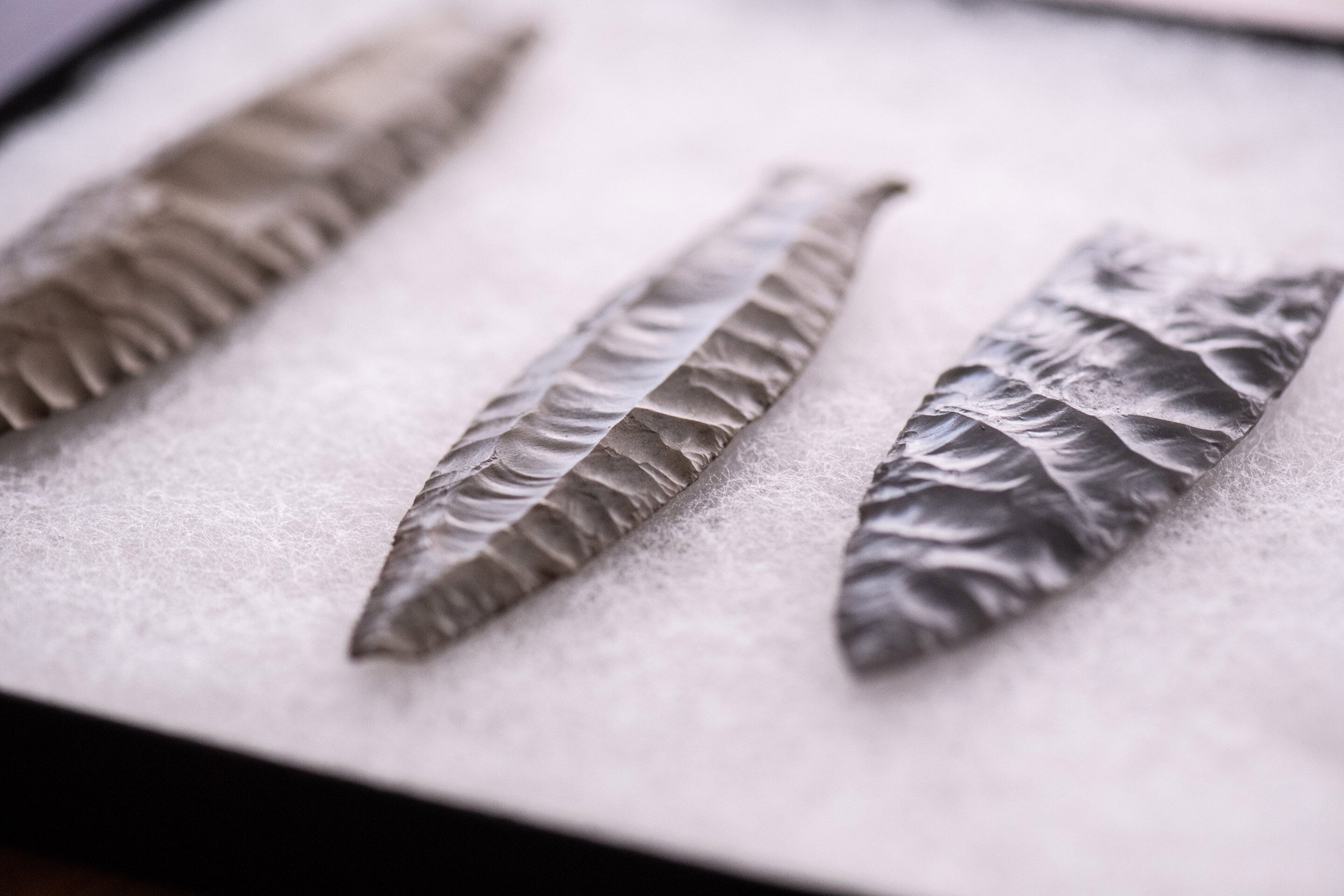
In the Tennessee River Valley, countless small drainages have cut down into four chert-bearing rock formations, the Fort Payne, the Warsaw, the St. Louis and the Ste. Genevieve, and left the stone lying in tabular slabs and cobbles along their beds. Chert breaks like thick glass, and it is the stone Ice Age knappers in the region worked into spear points. The two archaeologists behind a new study of the valley’s earliest artifacts describe its supply as effectively limitless, which makes it odd that the first people known to have lived there, the makers of Clovis points, used it as though it might run out.
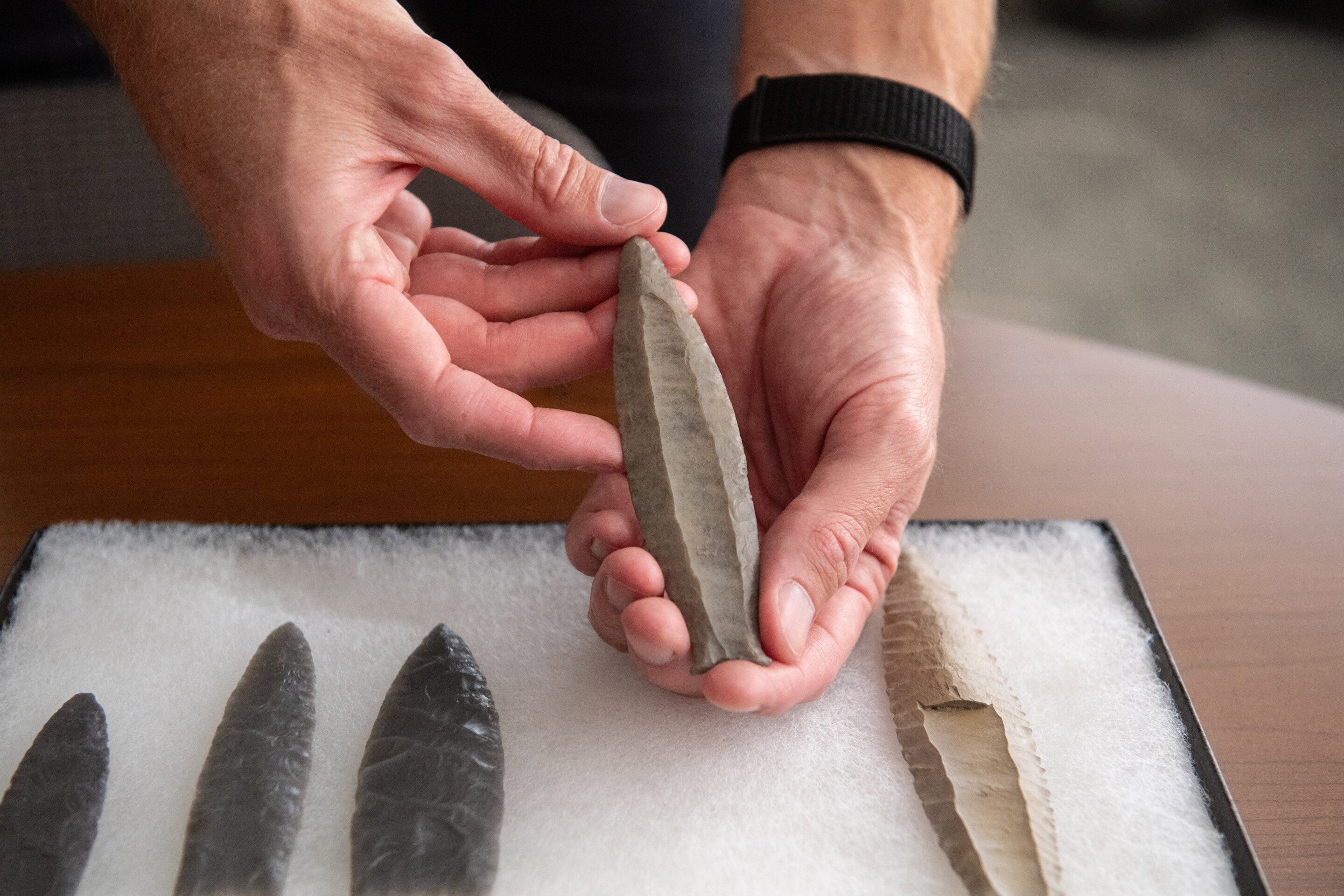
There is a common intuition about newcomers and old hands, and most of us would apply it here without thinking. People arriving in a rich place spend freely, because they have not yet learned what things cost, and their descendants, taught by generations of experience, learn to waste nothing. Under that sits a second intuition, that people are thrifty with a material because the material is scarce. A study of 489 fluted spear points from the valley, published online on August 27 in the Journal of Archaeological Method and Theory,1 runs against both. Its authors, Jesse Tune, an associate professor of anthropology at the University of Mississippi who directs its Center for Archaeological Research, and D. Shane Miller, an assistant professor of anthropology at the University of Alabama, found that Clovis hunters resharpened their points close to the practical limit before letting them go, while the Cumberland people who followed them threw away broken points with plenty of working edge still on them.
Clovis points are broad, with a concave base and a long channel flake, the flute, removed from the base partway up each face. They are found across much of North America, and the best current dating places their manufacture between about 13,050 and 12,750 years ago. Cumberland points came after them and stayed closer to home in the Midsouth. They are narrower and thicker, and their flutes run much further toward the tip. Their age is less secure: Tune’s earlier work puts them somewhere between roughly 12,800 and 12,000 years ago, so on paper the two ranges overlap slightly at the edge. No site older than Clovis is known anywhere in the valley, and the authors treat Clovis groups as the first people to walk it and Cumberland groups as their successors, several centuries on, who inherited a country already mapped in memory.
What the pair set out to test is whether knowledge leaves a mark in stone. The paper leans on a 2003 framework by the archaeologist M. Rockman, which splits what colonists must learn into three kinds. Locational knowledge, that an outcrop exists and where, can be had in a single encounter. Limitational knowledge, how the stone’s quality varies across the outcrop, how far the source extends, whether it can be reached in every season and how it compares with others in the region, builds up through repeated use. Social knowledge, the version passed between generations and folded into how a group moves and makes its tools, takes longest of all. The valley’s abundance is what makes it a fair test, because where stone lies in nearly every creek, a difference in how carefully people used it is hard to put down to the stone supply, and knowledge is what remains.