
A Singular Face Emerges From a Museum Shelf
In 2021, while working through an art catalog from a French museum, bioarchaeologist Beth Scaffidi paused over an object that should not have been there. It was listed among modern sculptures, ethnographic curiosities and colonial-era artifacts. But the image was unmistakable. She was looking at a human trophy head1 from ancient Peru.
The head, imported to Europe decades earlier, had traveled far from its original resting place on the dry southern Peruvian coast. Its leathery skin bore an unusual golden patina. Its ears carried large copper discs. And its mouth curved in an unmistakable L-shape.
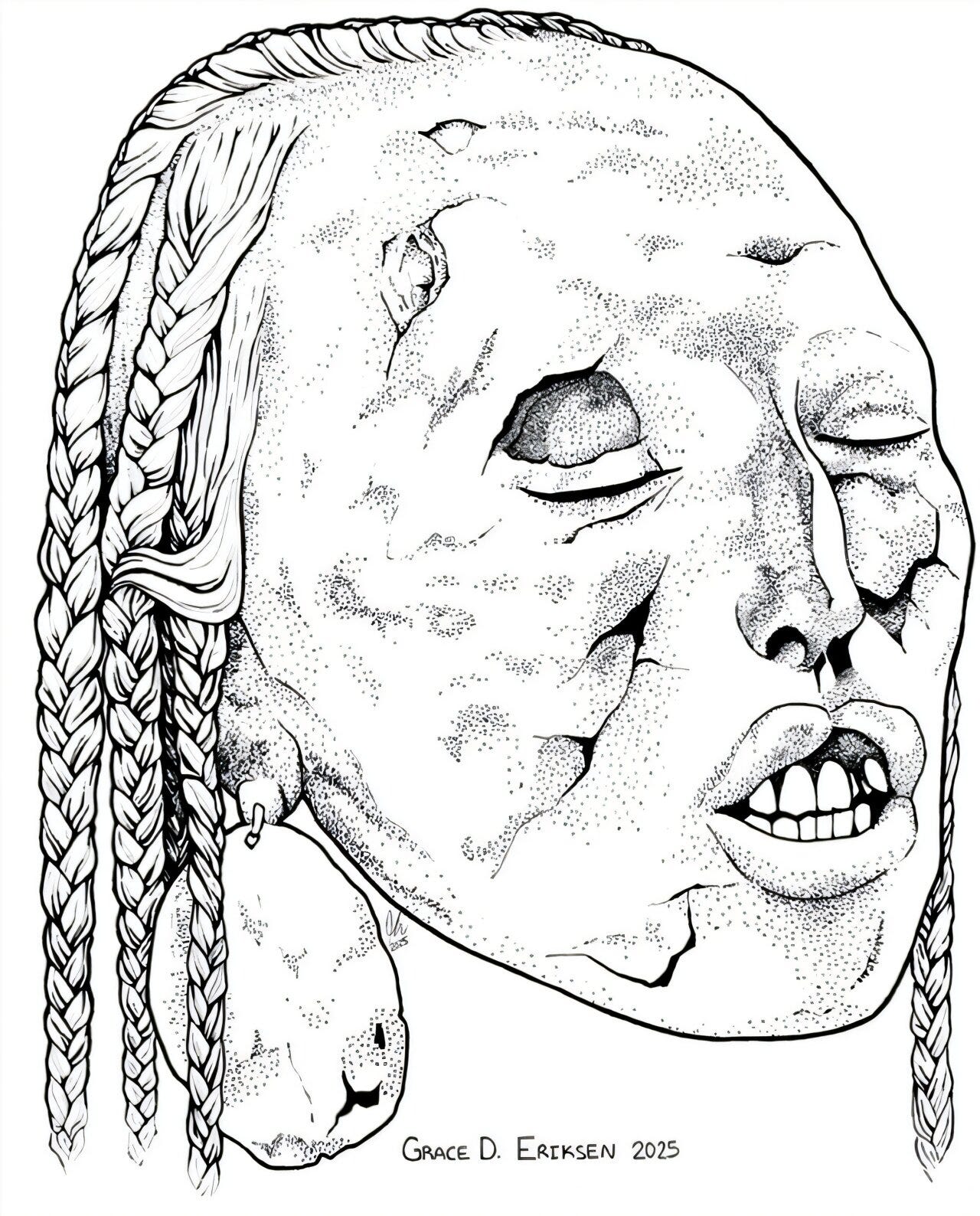
Scaffidi recognized what earlier collectors had missed: this individual had lived with a cleft lip and likely a cleft palate. In a single moment, an overlooked museum object became the first known Andean trophy head with this congenital condition.
“The presence of a cleft lip transforms the head from a generic ritual artifact into the biography of a specific person,” says Dr. Talia Fernand, an Andean osteologist at the University of Arizona. “It forces the viewer to reconsider how ancient communities perceived and incorporated visible difference.”
The identification adds a new chapter to the long and complicated history of trophy heads in Andean societies.


