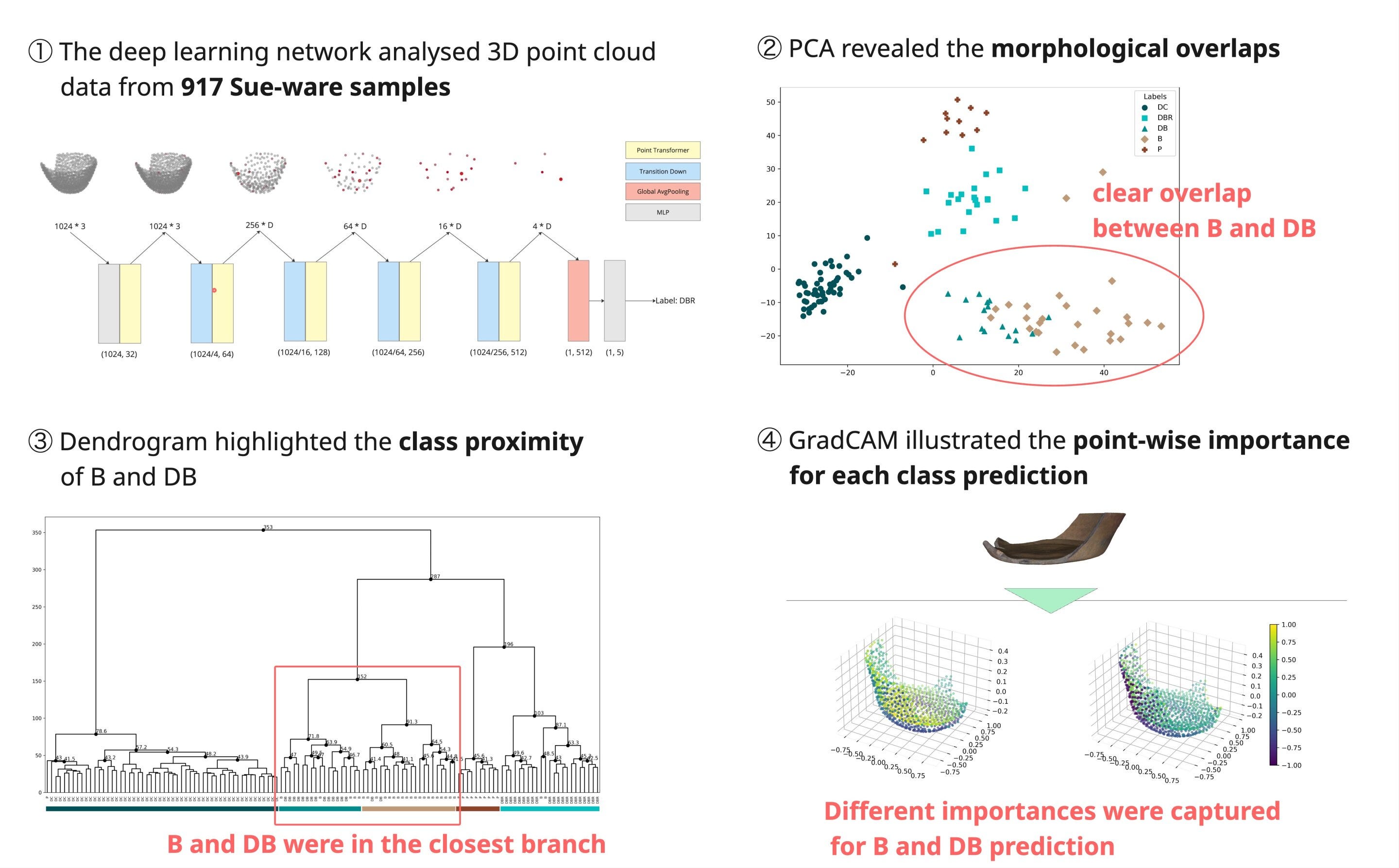
Pottery classification is, at its core, a problem of judgment. An archaeologist picks up a sherd, turns it in their hands, and reads it. The angle of the wall. The curve from base to rim. The way the profile transitions. This is what years of handling material culture produces: a calibrated intuition that most practitioners would struggle to articulate in rules. You know a bowl when you see one. Except when you don’t.
That uncertainty has long been a problem in Japanese Sue ware studies, and it turns out to be exactly the right kind of problem for a deep learning model to get its hands on.
A team led by Wataru Tatsuda and Hayata Inoue recently published results1 from training a 3D point cloud classifier on Sue ware from the Sanage kiln in Aichi Prefecture, one of the dominant production centers for this pottery tradition during the eighth through mid-ninth centuries. The model achieved an overall macro F1-score of 0.9320 across five vessel types. That number is worth pausing on. The hard part wasn’t building a classifier that worked well. The hard part was understanding what it struggled with, and why that struggle is archaeologically interesting.
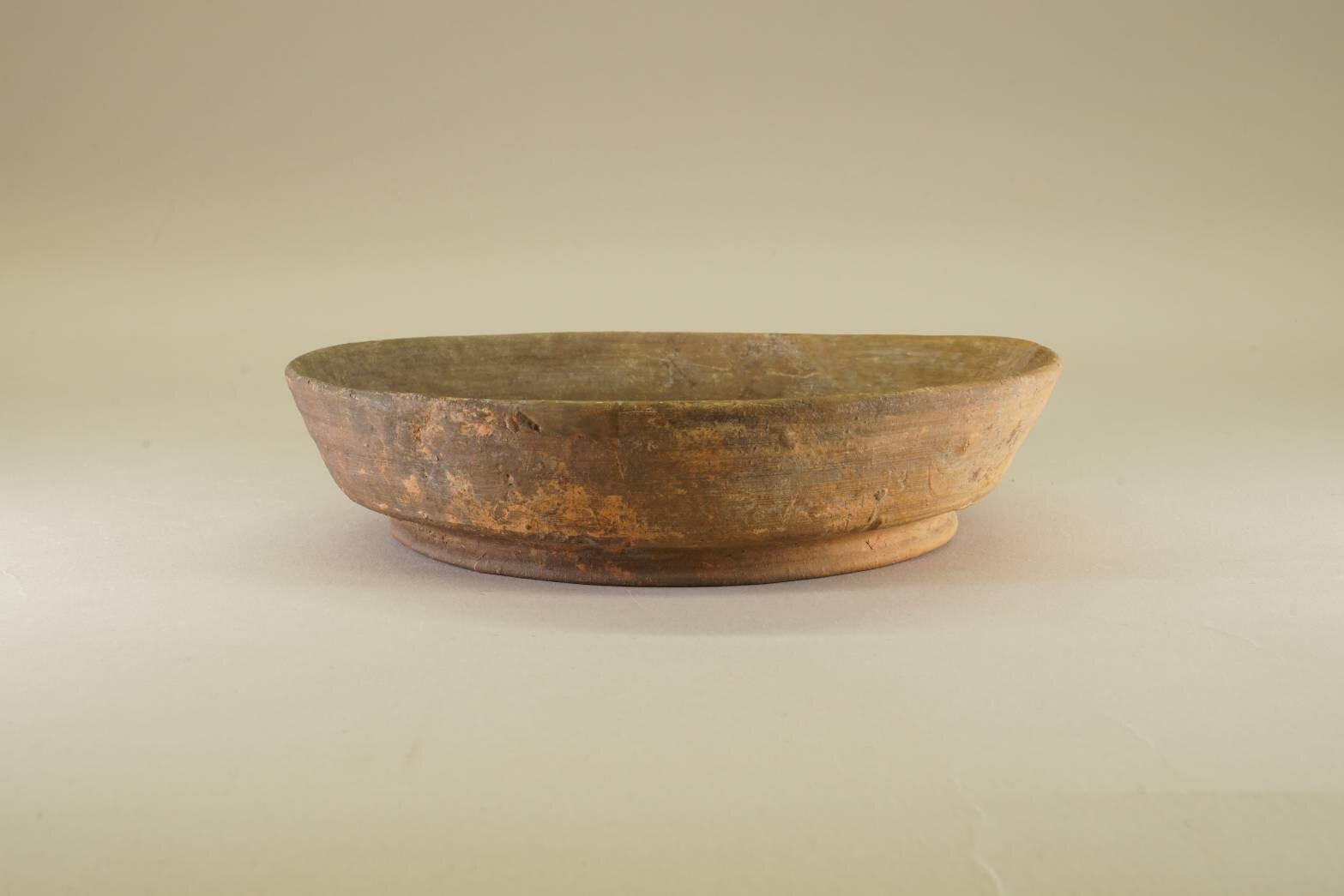
Sue ware itself is a natural candidate for this kind of work. It’s an unglazed stoneware, gray to brown-gray, wheel-thrown and tunnel-kiln fired, standardized in production to a degree unusual among ancient ceramics. Researchers have attributed some of that standardization to direct state involvement in the manufacturing process. The shapes are consistent enough to support typology, yet variable enough to generate real taxonomic disputes. Among the everyday tableware types from Sanage, two in particular have caused persistent headaches: the Dish Body and the Bowl.
The distinction, in principle, is straightforward. Dish-type vessels have steep inner walls and flat bases. Bowl-type vessels have gently curving walls and rounded bases. In practice, the eighth- to mid-ninth-century material from Sanage includes a substantial number of pieces that combine features of both, and expert archaeologists labeling the same sherds don’t always agree on which category applies. This isn’t sloppiness. It reflects something real about the material record.