
The logic seemed airtight. If a child’s skeleton shows the right combination of dental deformities and bone lesions, and if those features match the clinical signature of congenital infection with Treponema pallidum, then you have evidence that a mother passed syphilis to her fetus — which means venereal syphilis was present in that population. Paleopathologists have leaned on this reasoning for decades, particularly in the long, exhausting debate over whether syphilis existed in the Old World before Columbus.
A new study from Melandri Vlok and colleagues, published in the International Journal of Osteoarchaeology,1 finds three children in Neolithic Vietnam whose skeletons fit the congenital profile almost exactly. The catch is that everything else about the sites they came from points away from venereal transmission.
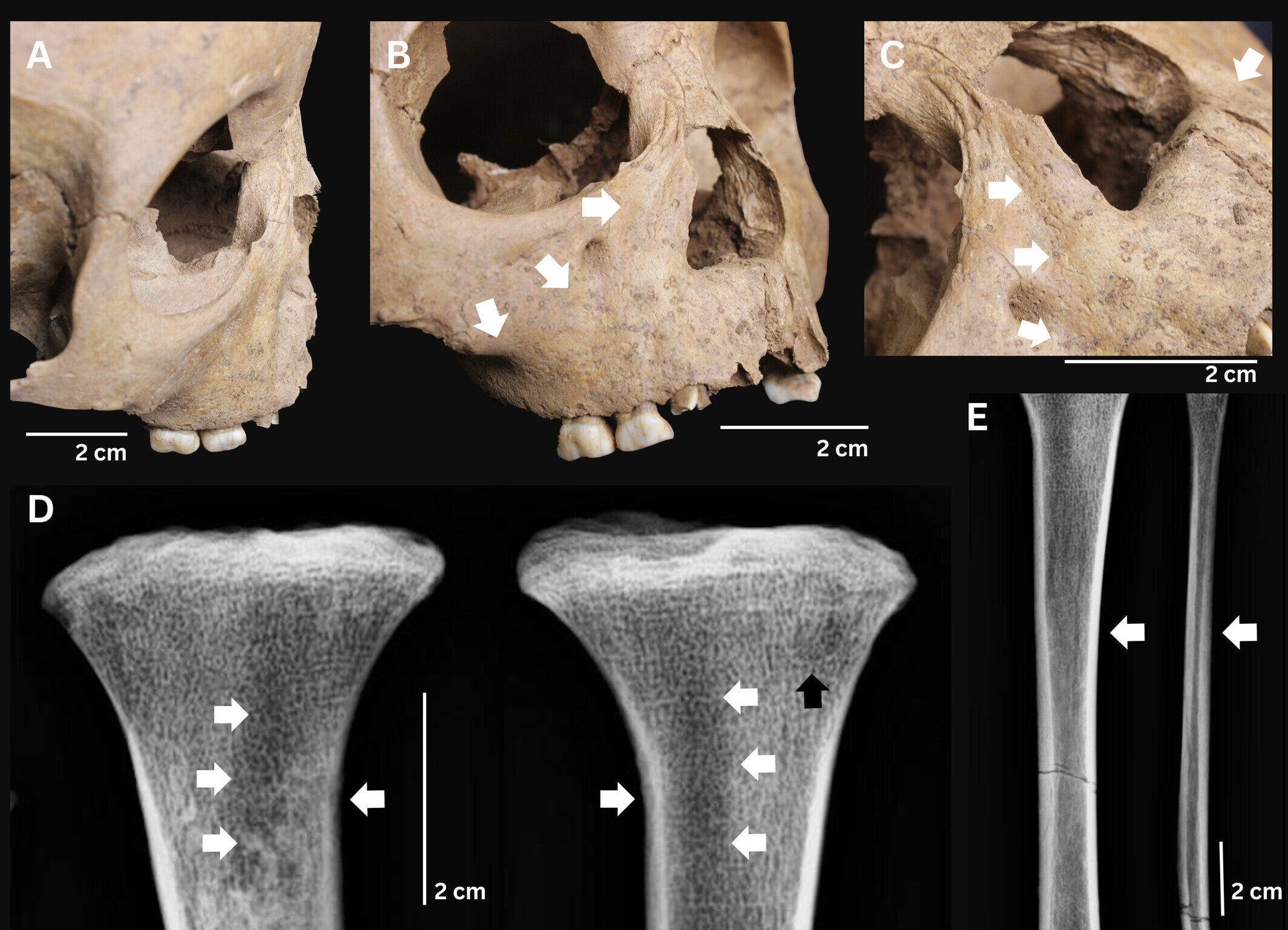
The team examined 309 individuals from 16 archaeological sites across Vietnam, spanning ten thousand to one thousand years before present. Only three individuals, all young children, showed the kind of pathology consistent with congenital treponematosis. Two came from a well-studied site in northern Vietnam called Man Bac, dated to approximately 4000 to 3500 BP. The third came from An Son in the south, dated to 3800 to 3200 BP. Together, they represent the earliest and westernmost evidence of congenital treponemal infection in the tropical Asia-Pacific.
What makes these cases interesting is not just what the bones show. It is what the broader pattern of infection at Man Bac strongly suggests about how the disease was actually spreading.


