

The figurine has no face. Where a head should be, the clay tapers into a flat stump. Someone pressed eleven dots into that stump before firing it, arranged into three columns, and then the object entered the archaeological record somewhere around 700 BC at La Blanca, a city on Guatemala’s Pacific coast that most people have never heard of.
That’s the thing you need to sit with for a moment. Not the writing question, not the calendar question, but the strangeness of the object itself. A human body, breasts and navel rendered with care, and then above the chest — nothing recognizable. Just a tab of clay, blank except for those eleven pressed marks.
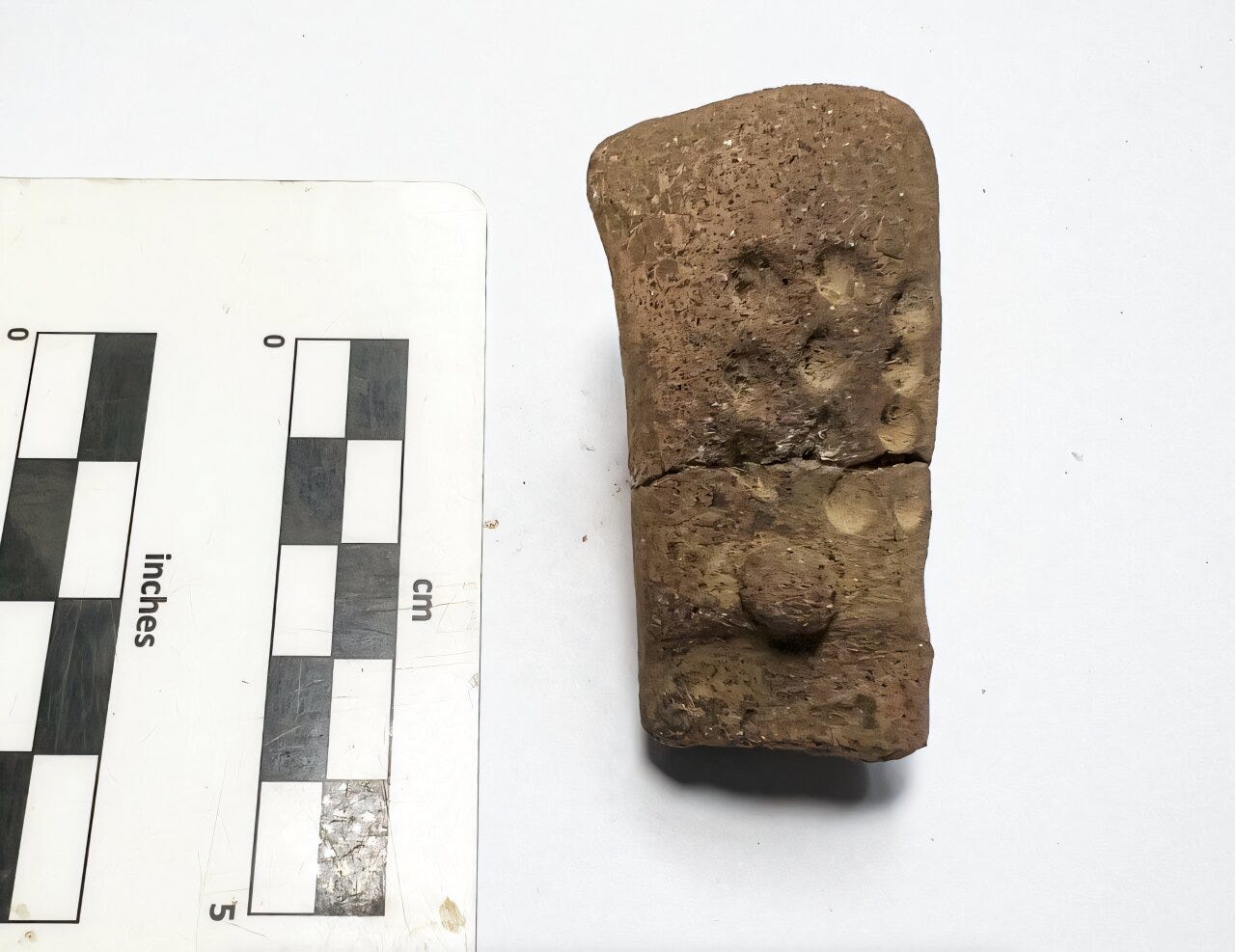
More than 300 of these “tab” figurines have been found at La Blanca over decades of excavation. Julia Guernsey, Stephanie Strauss, and Michael Love, the team behind a new study published in Latin American Antiquity,1 have worked through the site’s figurine assemblage long enough to know that the tab form was deliberate, meaningful, and consistent. Tabs sometimes have earspools. Some have headbands. The absence of a face was not a failure of craft. It was the point. The projecting tab, devoid of prescribed features, may have functioned as a kind of blank slate — a head freed from fixed identity, open to other kinds of marking.
Only one La Blanca figurine, of the several thousand found, was ever marked with dots like these.


