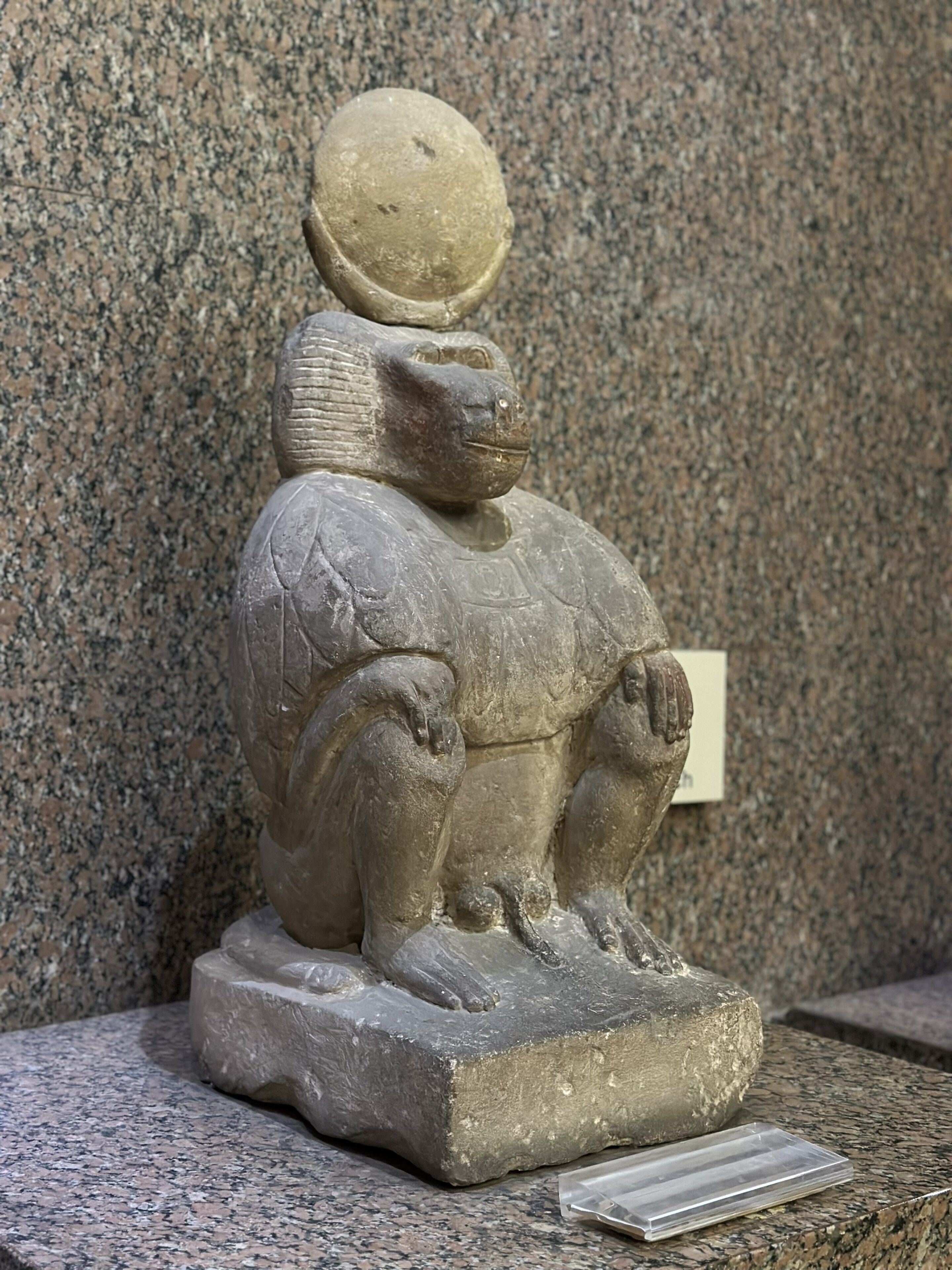
Harnufi the sacred baboon arrived in Egypt during the sixth year of Ptolemy V’s reign, was raised in a temple, and was buried thirty one years later, on September 6th of 168 BC. His entombment is recorded in the Baboon Catacomb at North Saqqara, one obituary among hundreds. The scale of that necropolis alone forces a strange question. Ancient Egypt had no wild baboons. None. The species is absent from the Holocene fossil record entirely. Every single mummified baboon interred in Egyptian soil, and there are hundreds of them, had to be imported, kept, fed, and eventually embalmed by people who had no local population to draw from and no ecological reason to care about the animal at all.
And yet baboons became one of the two bodies of Thoth, the god of writing, wisdom, and the moon. His other manifestation, the sacred ibis, at least makes intuitive sense. The bird was native, common, and its curved beak has an obvious resemblance to a crescent moon. The baboon offers no such easy explanation. Egyptologist Emily Teeter has called the whole arrangement inscrutable. A new paper by Nathaniel Dominy and Catherine Hobaiter, published in Time and Mind,1 tries to solve it with a spectrometer.