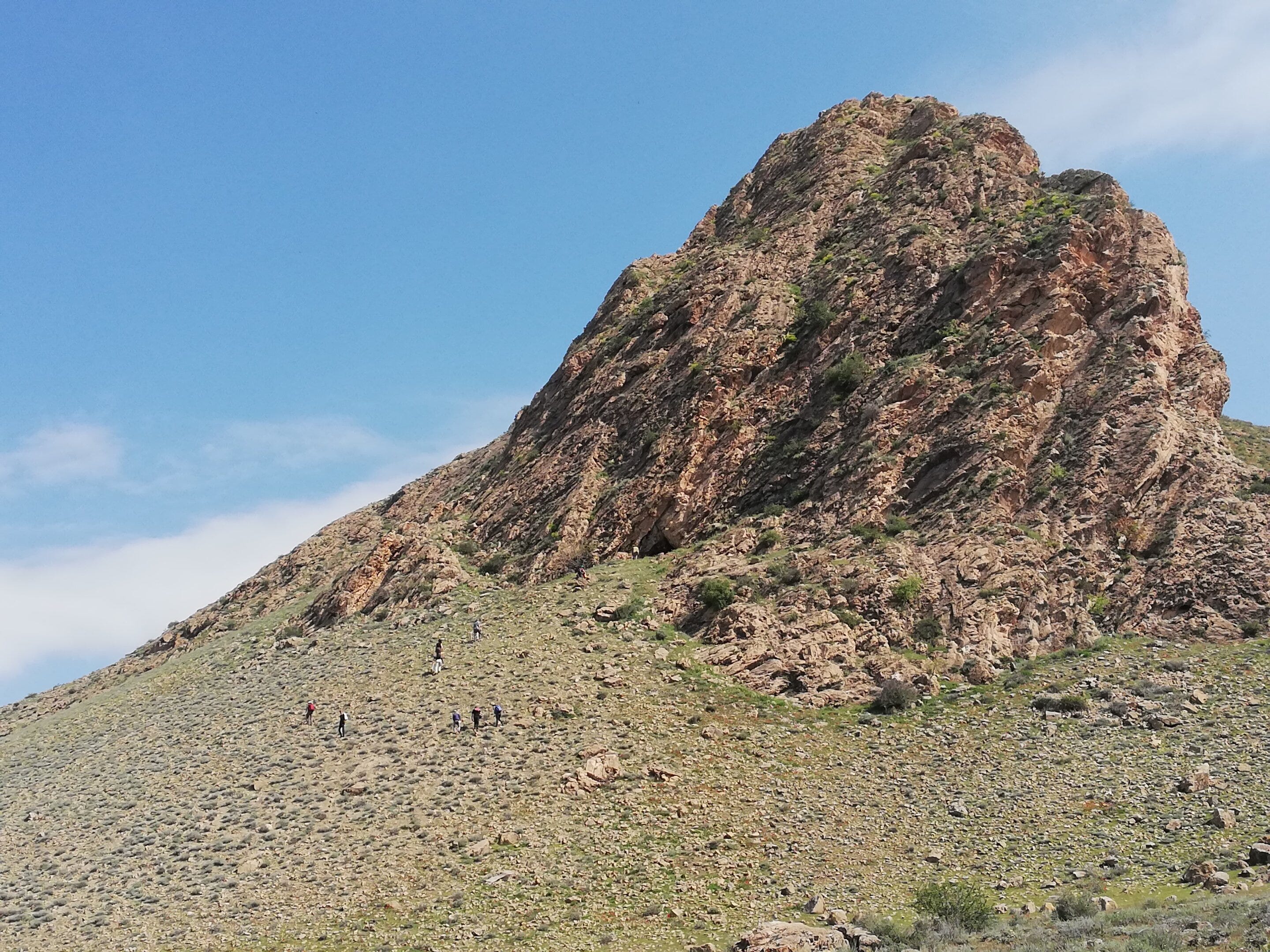
Most of what came out of Ararat-1 Cave would fit through a kitchen sieve. Of the 1,245 obsidian pieces recovered from this site in the Armenian Highlands, 70 percent are small to very small flakes, the kind of debris that older excavation methods routinely screened out or ignored. A team led by David Nora, working with Ariel Malinsky-Buller and colleagues from the Hebrew University of Jerusalem, Yale, and the Institute of Archaeology and Ethnography in Armenia, decided to keep all of it. That decision, more than any single artifact, is what makes their new paper in Quaternary Science Reviews1 worth sitting with.
The cave sits at 1,034 meters above sea level, a dissolution cavity carved into Devonian limestone on the edge of the Ararat Depression, a semi-arid basin flanked by volcanoes. People used it intermittently between roughly 52,000 and 33,000 years ago, leaving behind five stratigraphic units packed into about two meters of debris flow deposits. It’s not a dramatic site in the way a cave full of hearths and burials is dramatic. It’s dramatic in the way an accounting ledger is dramatic, once you learn to read it.