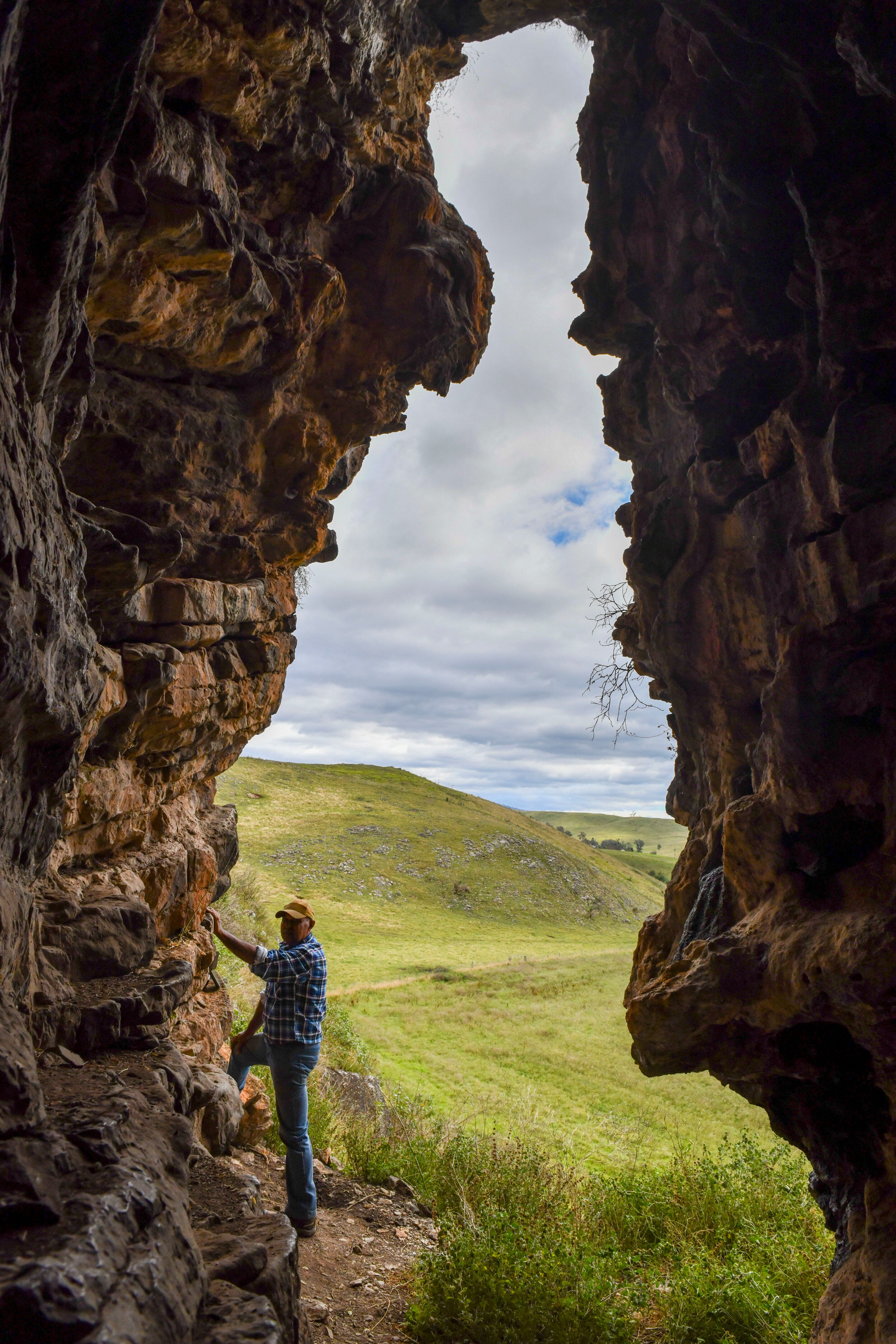
A standing stone, 28 centimeters tall, sits buried inside a layer of ash roughly 2,000 years old in Cloggs Cave, in GunaiKurnai Country in southeastern Australia. Nobody planted it there by accident. Someone carried it in, stood it upright, and left it among dozens of thin, laterally spreading sheets of burned plant material that had already been accumulating in that spot for tens of thousands of years before the stone arrived, and that kept accumulating for more than a thousand years after.
That’s the strange, durable fact at the center of a new study in Frontiers in Environmental Archaeology:1 people were bringing grass into a dark, lightless cave and burning it there, in careful, repeated layers, for 25,000 years. Not occasionally. Not as a byproduct of cooking or shelter. As a practice, sustained across a span of time that dwarfs the entire history of writing, several times over.
Cloggs Cave isn’t obscure to the GunaiKurnai. Nineteenth-century ethnographic accounts and oral traditions already identified caves like it as places where mulla-mullung, powerful ritual specialists, performed magic, healing, and cursing. What the new phytolith study does is show that the archaeological record backs up exactly what the oral record always said, and pushes the depth of that continuity back further than almost anywhere else on the continent.