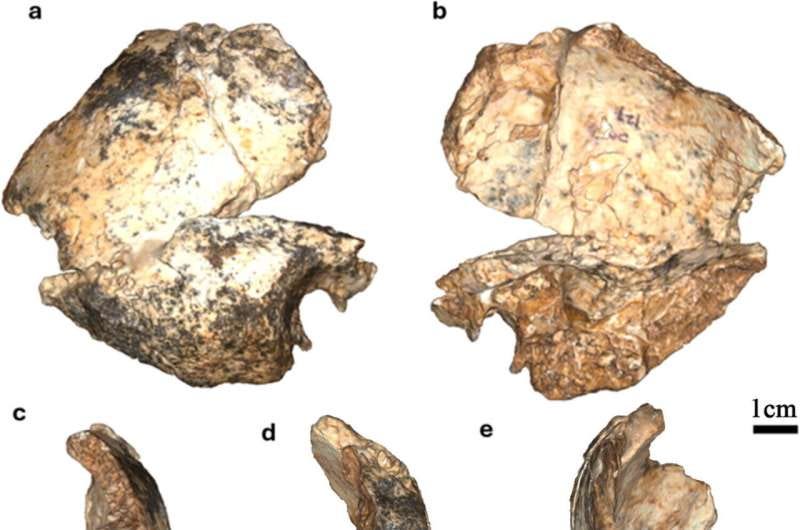
The fossil catalogued as DNH 127 came out of a loose, partly decalcified block of breccia on the southeast side of the DNH 7 Pinnacle, in the old lime-mining pit at Drimolen Main Quarry, about forty kilometres northeast of Johannesburg. The excavation records give the year as 2008. It is a right temporal bone with a piece of parietal and a scrap of occipital attached, the part of the skull behind and above the ear; the parietal wall above the suture stands 44.7 millimetres tall and is at most 7.2 millimetres thick. Nobody described it for years. Now Jesse Martin, of the Palaeoscience Labs in the Department of Archaeology and History at La Trobe University, and four co-authors have assigned it, tentatively, to Homo erectus. That makes it the first adult of the species from Drimolen, and at roughly 2.04 to 1.95 million years old it predates the adult Homo erectus fossils from Dmanisi in Georgia, which are about 1.8 million years old.
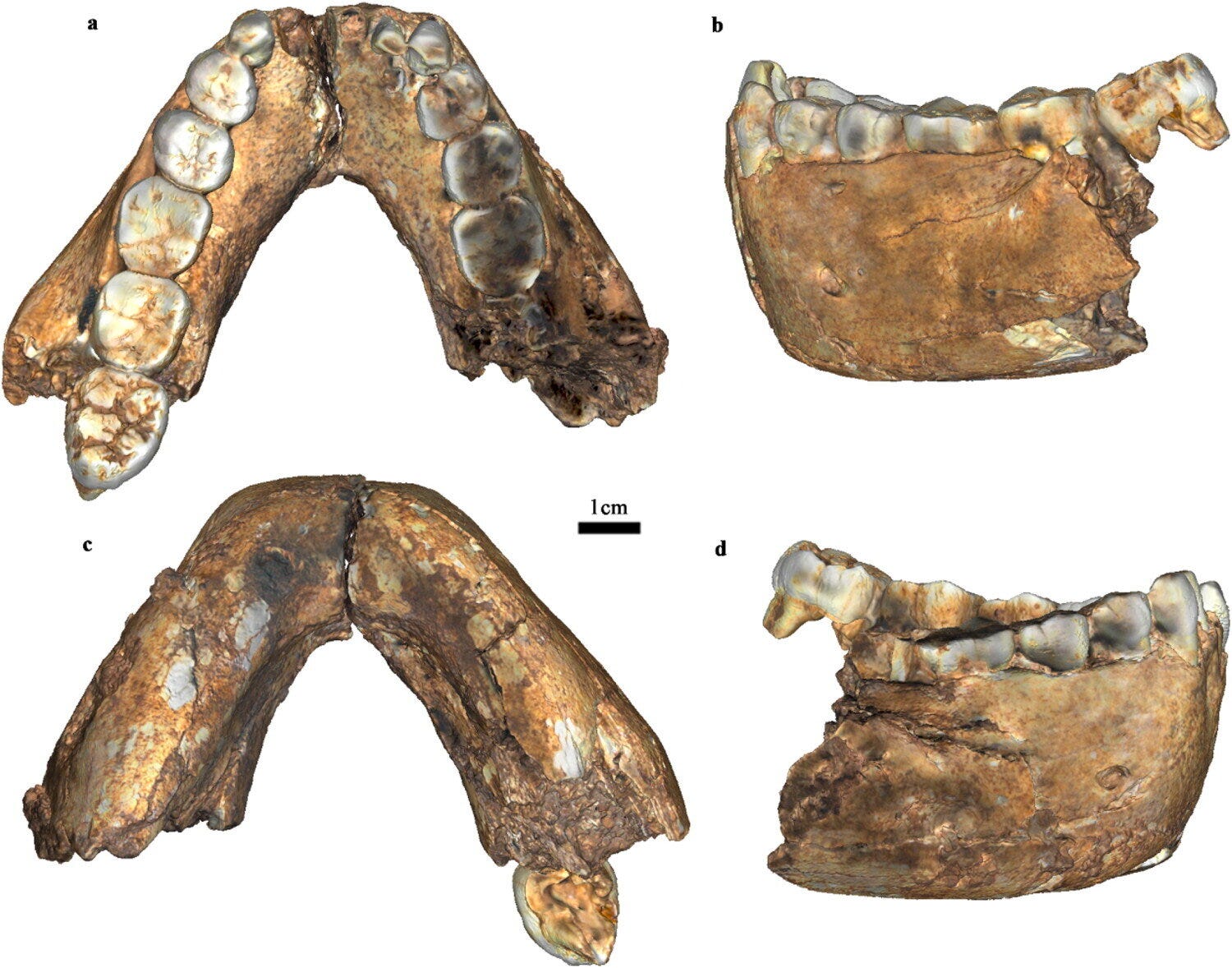
The usual telling of this period treats Homo erectus as the species that arrived with the bigger brain and the smaller molars and simply took over, an ancestor with an obvious future. Drimolen gives a different count. Martin says that 2 million years ago Paranthropus robustus outnumbered Homo erectus at the site by more than 10 to 1, and that our ancestors “looked like long shots to survive.” That ten-to-one figure comes from the university’s summary of the study. The paper itself reports fourteen P. robustus to one H. erectus within its batch of eighteen fossils, and calls that ratio broadly compatible with Swartkrans (Brain, 1993) and with earlier dental samples from Drimolen.
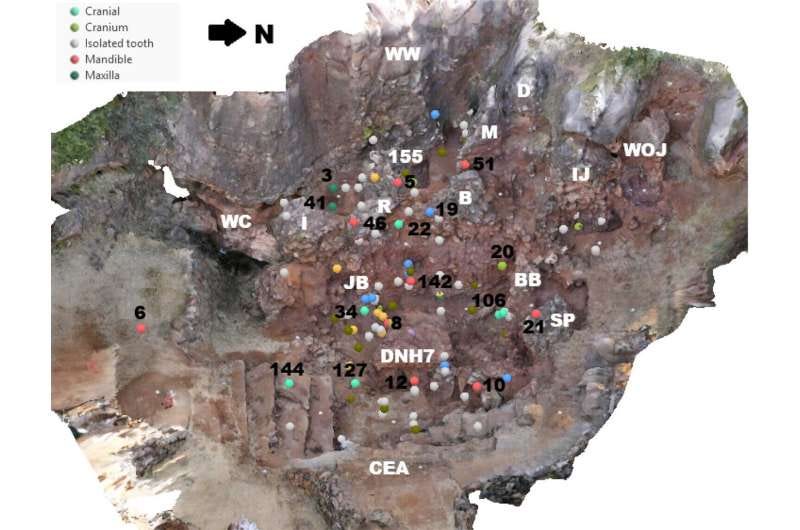
The paper, in Annals of Human Biology1 (Martin, A. B. Leece, Stephanie Baker, Andy I. R. Herries and David S. Strait, 2026), describes eighteen cranial and mandibular specimens excavated between 1992 and 2019, most of them dug by Andre Keyser’s team in the 1990s. Fourteen went to Paranthropus robustus, one to Homo erectus sensu lato, and three could not be placed beyond Hominini. The Paranthropus material also supports the authors’ argument that the Drimolen population, named the subspecies P. robustus ukusa, differs from the later Swartkrans and Kromdraai B samples through gradual change over time, with less bite force at Drimolen. They reject the older alternative, that Drimolen simply held mostly females and Swartkrans mostly males.