
The most accepted early site in the Americas has been studied independently exactly once, and that was 1997. Before this week, no team outside the original excavators had gone back to Monte Verde to check the dating. That fact alone should have been strange enough to notice. For nearly half a century, the chronological anchor of pre-Clovis occupation in South America rested almost entirely on the word of one research group.
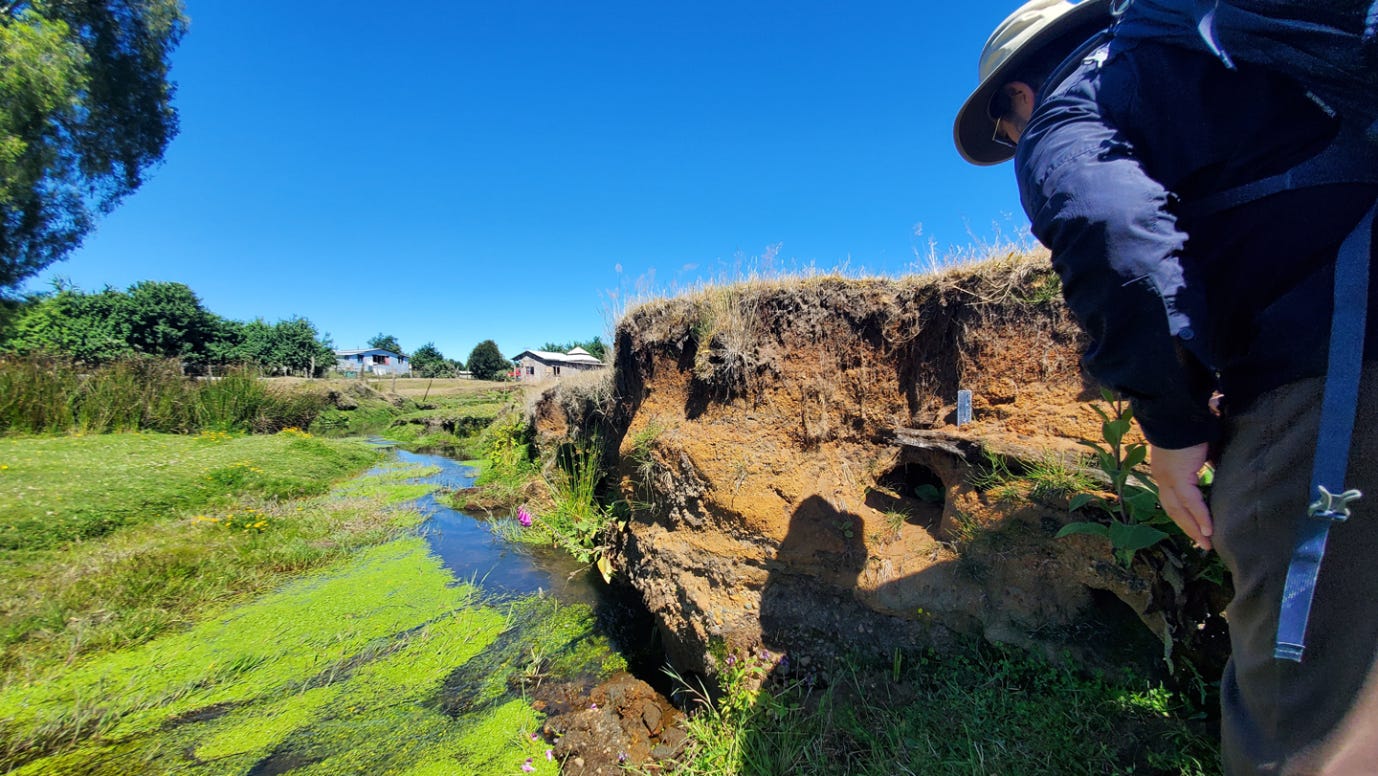
Todd Surovell of the University of Wyoming and colleagues have now done what nobody else bothered to do. They went to the Chinchihuapi Creek valley in southern Chile, described and sampled nine alluvial exposures, ran radiocarbon and optically stimulated luminescence dates, and came back with a finding that will not go down quietly: the Monte Verde II component, previously dated to roughly 14,500 years before present and celebrated as the clearest evidence that people were in South America well before the Clovis culture, is not Late Pleistocene. Their analysis, published today in Science1, argues it dates to the Middle Holocene — somewhere between 8,200 and 4,200 years ago.
That is not a minor revision. That is a difference of six to ten thousand years. If Surovell and his colleagues are right, one of the foundational facts of New World archaeology is wrong.


