
The Sierra de Atapuerca is geologically generous. Within a five-kilometer radius of its Pleistocene archaeological sites, prehistoric toolmakers had access to chert in several varieties, quartzite, sandstone, quartz, and limestone. These materials occur across the landscape in different contexts: chert in nodular outcrops on the ridgeline and slopes, quartzite and sandstone as cobbles in the river terraces below. The assemblages at Atapuerca reflect this diversity. Across hundreds of thousands of years of occupation at sites like Galería and Sima del Elefante, hominins drew on the full menu.
Then there is level TD10.2-BB at Gran Dolina, which ignores all of it.
Of the 10,735 lithic artifacts recovered from this sublevel, nearly 99% are made from local chert. Not a mix weighted toward chert — essentially nothing else. Quartzite, sandstone, and quartz are there in marginal quantities that register more as statistical noise than as deliberate choices. For a site embedded in one of the most materially diverse lithological environments in Pleistocene Iberia, this is a striking pattern, and it demands explanation.
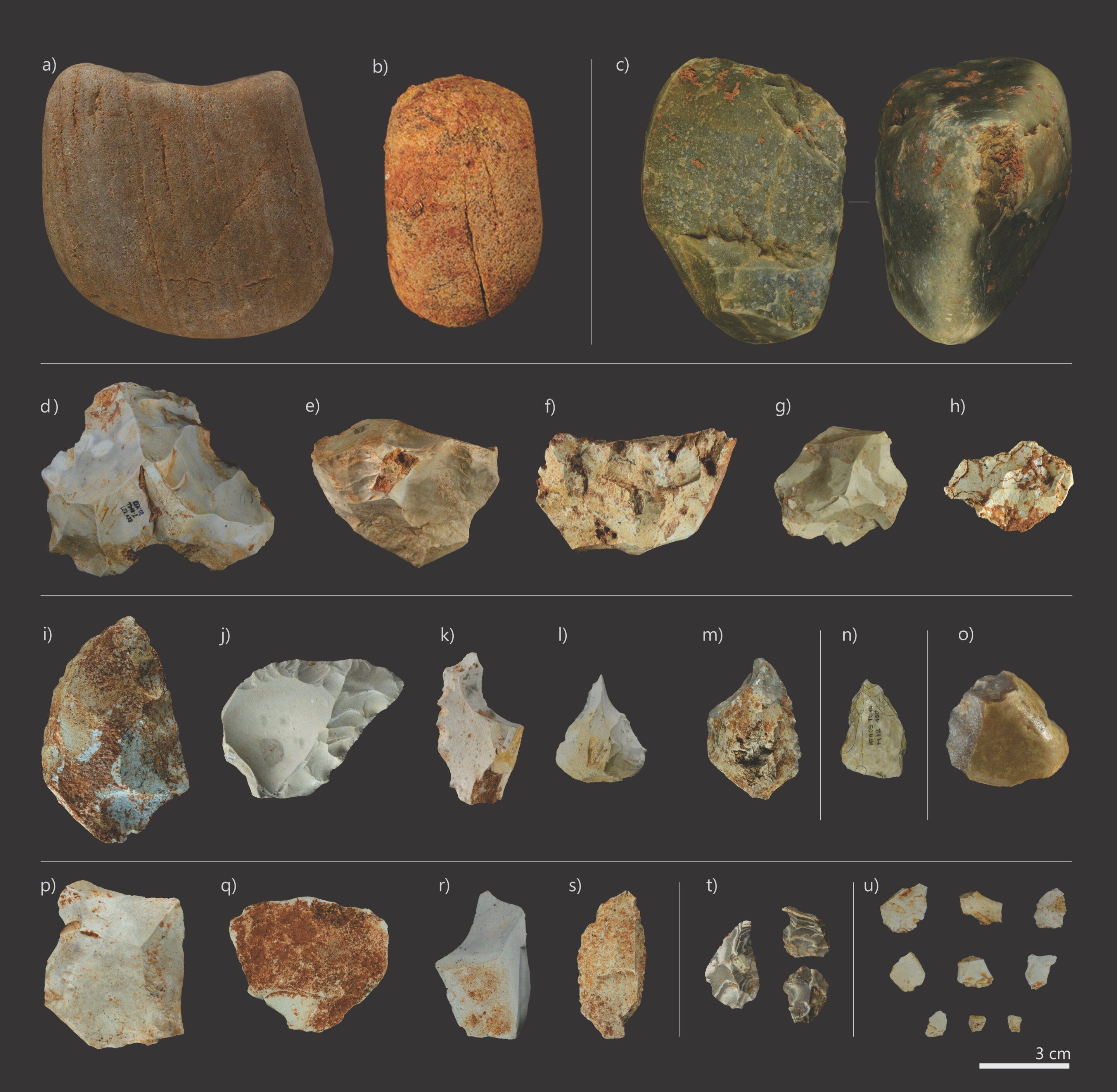
The study,1 led by Andion Arteaga-Brieba at CENIEH in collaboration with IPHES and the Universitat Rovira i Virgili, is the most detailed attempt yet to make sense of why TD10.2-BB looks the way it does. Their answer is inseparable from what else was happening at this spot around 400,000 years ago.


