

Three separate archaeological excavations have torn into Raknehaugen, and none of them found a body.
The first digs took place in 1869 and 1870, when antiquarian Anders Lorange sank a shaft from the summit and cut trenches toward the center. He reached bedrock. No chamber, no grave, no remains. A second round in 1939 and 1940 under Sigurd Grieg opened a larger area and confirmed the absence. Grieg eventually concluded it was probably a cenotaph, a monument to someone buried elsewhere. A subsequent reanalysis of fragmented cremated bone from the 1940 excavations briefly revived the burial hypothesis. The bone, it turned out, dated to somewhere between 1391 and 1130 BC, centuries before the mound’s construction. It had been redeposited there, mixed into the soil. It was not evidence of a burial.
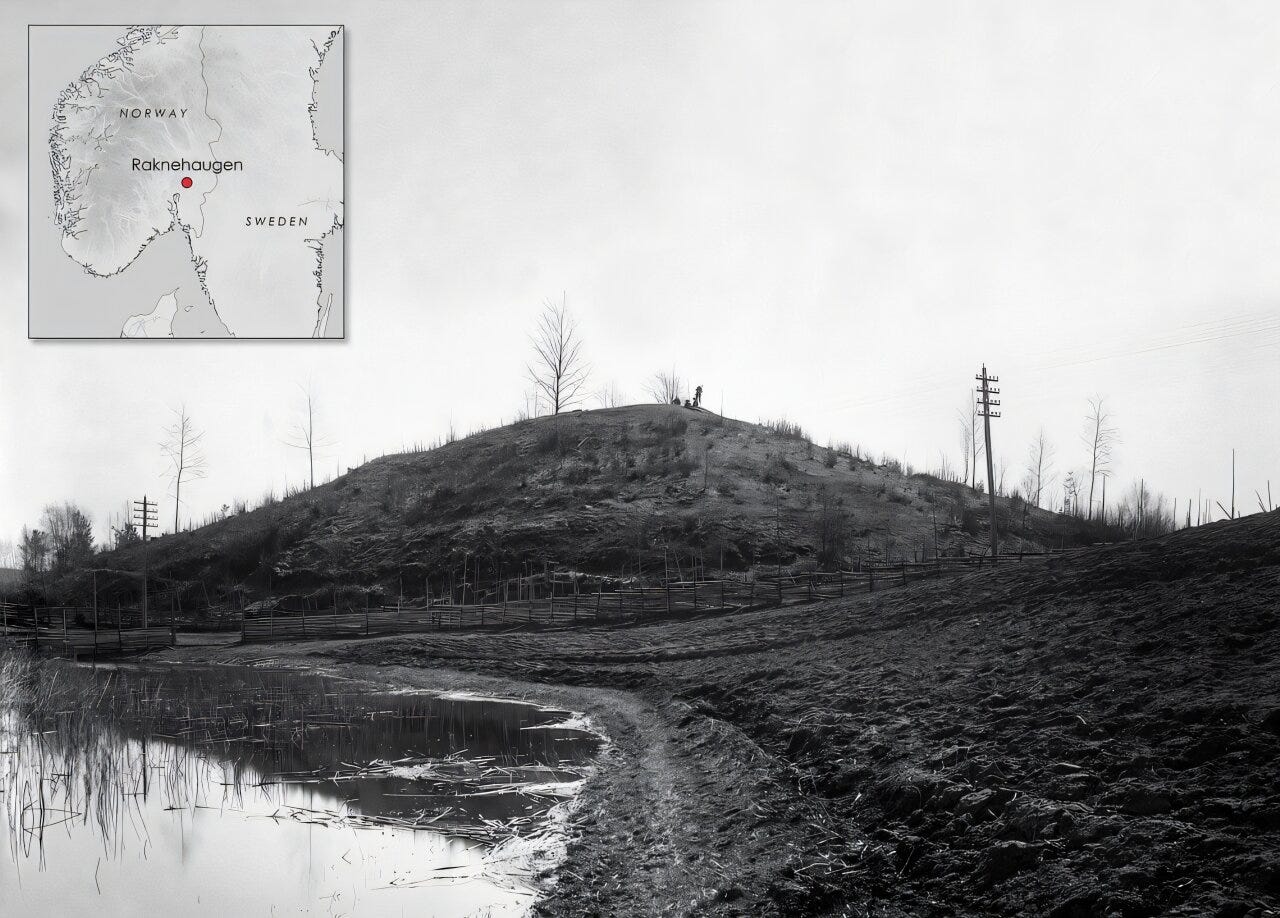
Raknehaugen, rising some 15 meters above a fertile plain roughly 40 kilometers north of Oslo and stretching 77 meters across, is the largest prehistoric mound in all of Scandinavia. It was built around AD 551. For 150 years, the standard interpretation has been that it commemorated a powerful individual. The mound, the thinking went, was a material expression of elite authority: the bigger the mound, the greater the person inside.
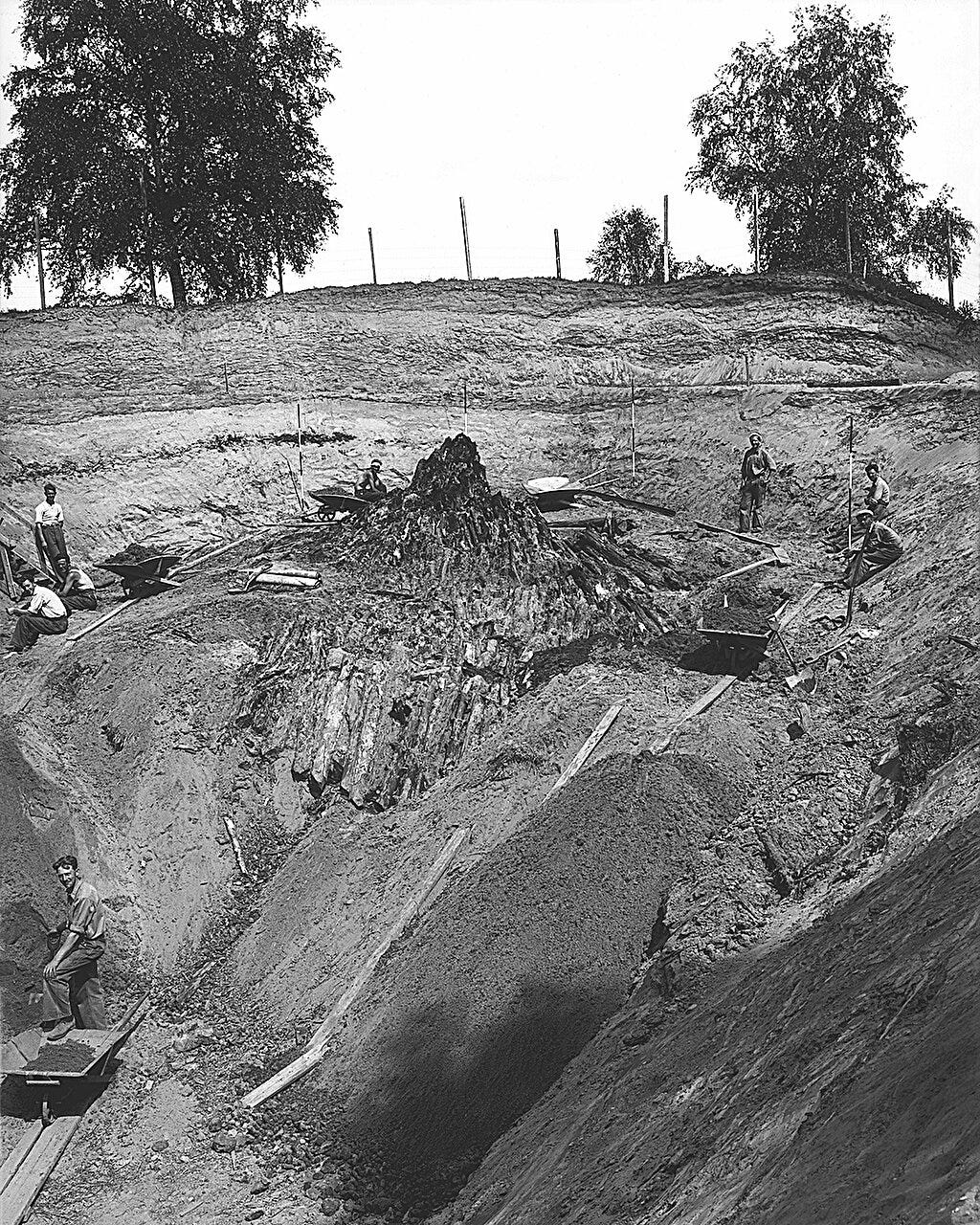
But Raknehaugen has been humoring this interpretation without supporting it.
A new study by Lars Gustavsen of the Norwegian Institute for Cultural Heritage Research, published in the European Journal of Archaeology,1 proposes a different answer. Gustavsen argues that Raknehaugen was a communal ritual response to a catastrophic landslide, not a burial monument at all. The evidence, once you look at it sideways rather than straight down through excavation shafts, turns out to have been hiding in the landscape the whole time.


