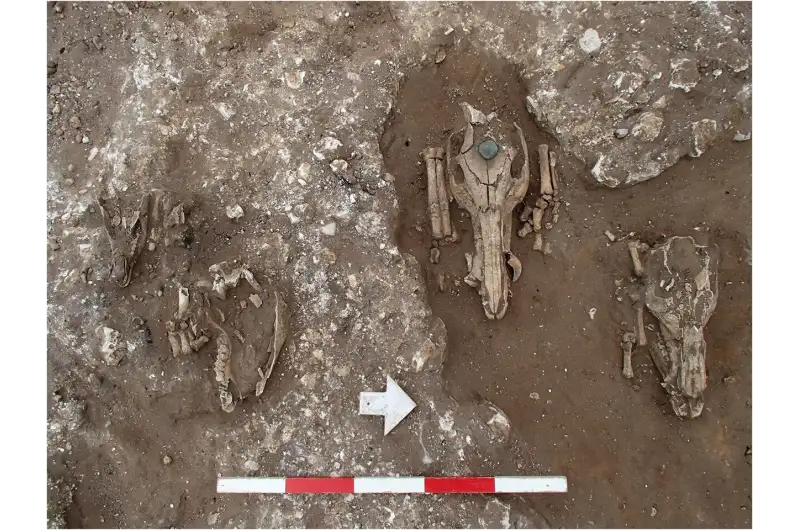
A pig’s skull sat in the ground with a coin resting on the top of its cranial vault. Not beside it. On it. The coin was a sestertius of Antoninus Pius struck in AD 156 or 157, worn almost smooth from decades of handling before somebody set it down on the bone. In the same pit, a second skull carried a dupondius of Faustina from AD 142. A third skull lay underneath both of these with no coin, but with a patch of green copper staining across its frontal bone where one had been and had since corroded away to nothing.
All the skulls faced east. Each came with its own articulated fore- and hindlimbs, the feet still in anatomical order, which is what archaeologists mean by a “head-and-hoof” deposit and which usually indicates the hide was still attached when the animal went into the ground.
Directly east, about five metres away, stood a small timber building.
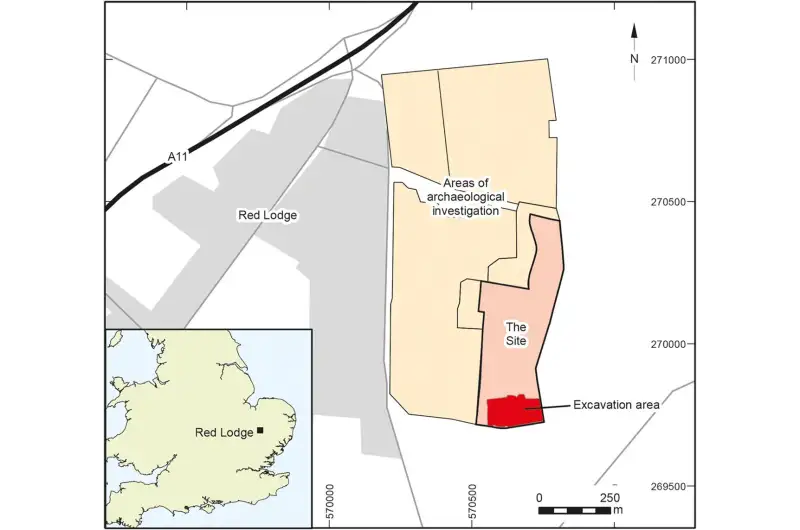
This is the site at Land East of Kings Warren, Red Lodge, in the chalk country of west Suffolk, excavated by Archaeology South-East in 2016 ahead of a housing development and published this year in Britannia1 by Angus Forshaw. The excavation turned up material from the Early Neolithic through to the Middle Ages. The Roman-period parts are the ones worth sitting with, because they are built on something much older.