

Sometime in late 2018, someone working on the Sudan Memory project needed to get money into Khartoum, and the normal channels would not take it. International sanctions had cut Sudan off from routine banking transfers for years, and when the project needed cash to pay staff and cover the daily costs of running a digitization operation out of several cities at once, it went in by hand. The project’s own internal timeline records this in a single flat line, wedged between an equipment note and a comment about an unreliable internet connection: cash physically transported. No amount given, no method described, just the fact that money capable of funding a mass digitization project, one built around scanning and metadata and long-term digital storage, could not, in Sudan in 2018, move through a bank.
Sudan Memory1 is the first mass digitization project ever attempted in Sudan. Its roots go back to January 2013, when Dr. Badreldin Elhag Musa, executive director of the Sudanese Association for Archiving Knowledge, contacted archival institutions in the UK about Sudanese cultural heritage he considered at risk, not from war, since there wasn’t one yet, but from the ordinary decay that threatens any uncatalogued archive: paper rotting, negatives degrading, tape demagnetizing. That inquiry eventually reached Professor Marilyn Deegan at King’s College London, who would go on to lead the project as its managing director. By December 2017, with an initial £800,000 from the British Council’s Cultural Emergency Fund, later topped up to £1,170,000, and from 2019 a further $655,000 from the Aliph Foundation, formal digitization work had begun across institutions in Khartoum and beyond.
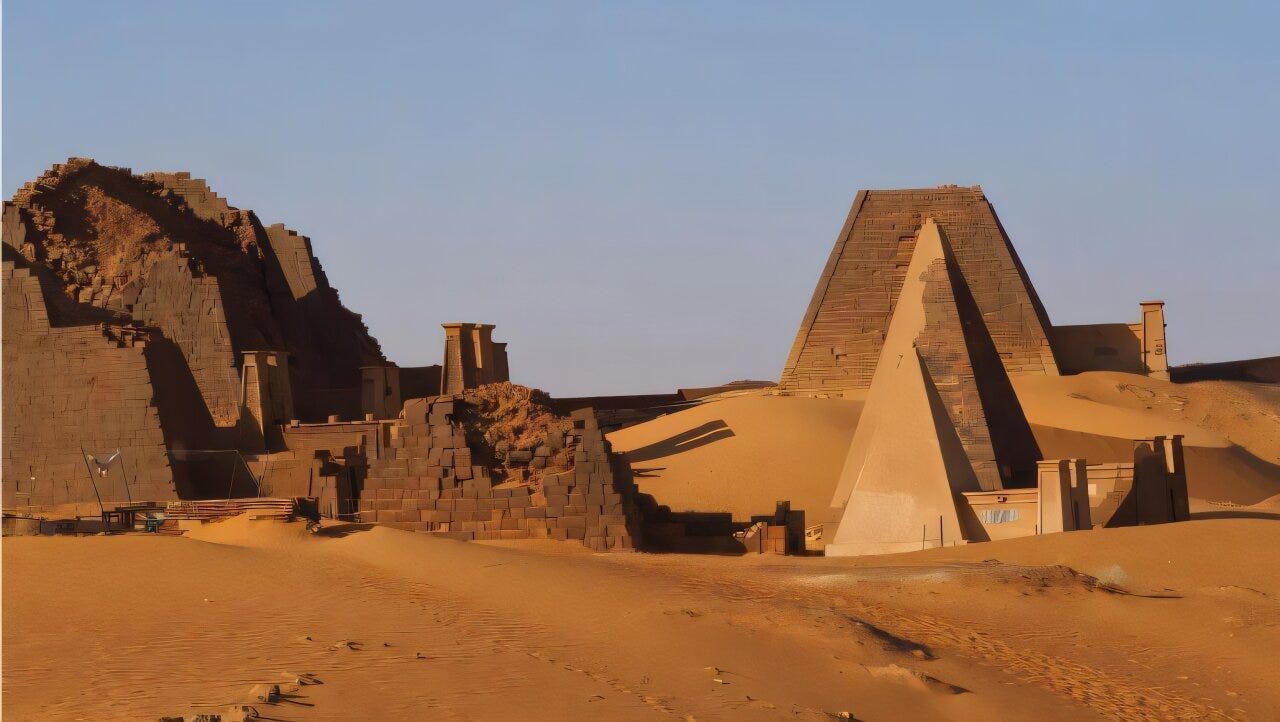
By 2022, the project’s team, spread across partner institutions in Sudan and collaborators in the UK, had digitized roughly 148,000 items drawn from forty-three public and private collections: photographs, manuscripts, museum objects, film and audio recordings, oral histories, and a 3D interactive reconstruction of what the historic port of Suakin might have looked like around 1900. Sixty thousand of those items, described in both English and Arabic, went up on a public website. The rest existed only in the project’s own storage, subject to agreements that varied collection by collection.
Nobody involved in 2013 was digitizing against a war that hadn’t happened yet. That war arrived in April 2023, when fighting broke out across Sudan and cultural institutions including the National Museum and the Khalifa House Museum were looted and damaged. But the years in between, the ordinary years of scanning manuscripts and cataloguing photographs under a government that fell in 2019, then a pandemic, then a fragile transition, turned out to matter more than anyone planning the project in 2013 could have known. A new history of the project, compiled by researchers at King’s College London from fourteen interviews conducted between January and May 2025 with the people who built it, keeps circling back to a single, under-examined idea: that digitizing something is not the same as de-materializing it. The digital copy still has to live somewhere. It still has to move through customs, survive a bad internet connection, and get carried, sometimes literally, from one place to another.


