

There’s a question in human evolutionary biology that tends to get either oversimplified or quietly avoided: why do human women have permanently enlarged breasts?
Not during lactation. Not briefly, like other primates. Always. Starting at puberty, years before a first pregnancy, in women who have never nursed and never will. The size and shape that define the human female breast are not required for milk production. Other great apes produce milk just fine without them. Chimpanzee and gorilla females develop prominent mammary tissue during active lactation, then it recedes. Ours doesn’t.
The anatomy is strange if you think about it carefully. The bulk of the human breast isn’t glandular tissue. It’s fat. Subcutaneous adipose tissue deposited during puberty and retained throughout adulthood. This fat isn’t doing anything obvious for lactation. It correlates with back pain. It has real biomechanical costs. From a strict efficiency standpoint, it looks like a liability.
The explanations that have been offered over the decades tend to cluster around sexual selection: breasts as an honest signal of reproductive fitness, analogous to facial symmetry or hip-to-waist ratio. There’s some support for this. Breast size and symmetry do correlate weakly with certain hormonal markers. But the hypothesis has problems. Cross-cultural surveys show that in many societies breasts are not particularly sexualized. They’re for feeding babies. The assumption that male preference drove breast evolution is hard to disentangle from the cultural context of researchers doing the asking.
A 2021 review by Pawłowski and Żelaźniewicz proposed that permanent breasts probably started as a side effect of broader increases in subcutaneous fat during human evolution, and were then potentially amplified by sexual selection. That’s reasonable and probably partially right. But it doesn’t fully explain why fat deposited specifically there, or why nursing women’s breasts behave differently than non-nursing women’s breasts at all.
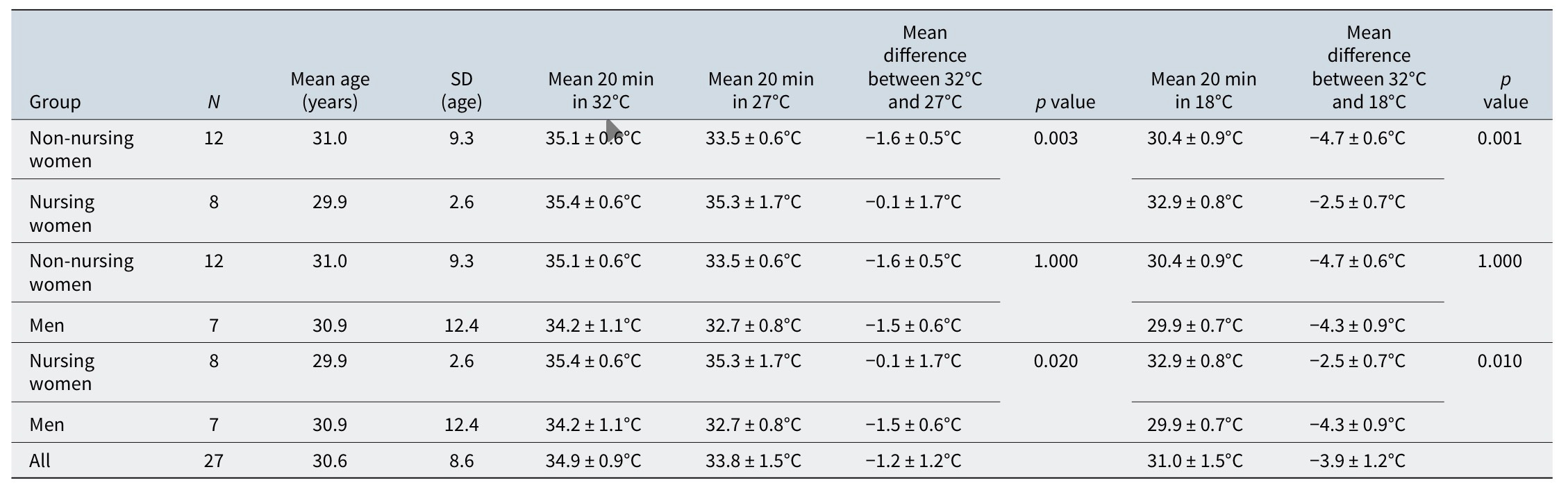
Which brings us to a small study out of the University of Oulu, Finland, published in Evolutionary Human Sciences1 in 2026, that offers a different angle entirely.


