

A New Appetite for Old Evidence
Every few years, the Paleolithic returns to the dinner table. Trend pieces invoke a rugged ancestor gripping a spear, living on haunches of meat charred over a fire. It is a tidy image, indulgently simple. But simplicity rarely survives contact with archaeology, and the newest synthesis on early diets dismantles the old myth with the patience of a seasoned excavator brushing dust from a much older truth.
The study1 at the center of this discussion, by S. Anna Florin and Monica Ramsey, offers a sweeping re-evaluation of humanity’s ecological strategy. They argue that humans did not become plant eaters reluctantly or recently, but that Homo sapiens and other hominins were born into plant-rich landscapes and equipped with the skills to make those plants matter. As Florin and Ramsey put it, we are a “broad spectrum species,” adapted not for one kind of food or one kind of world, but for many.
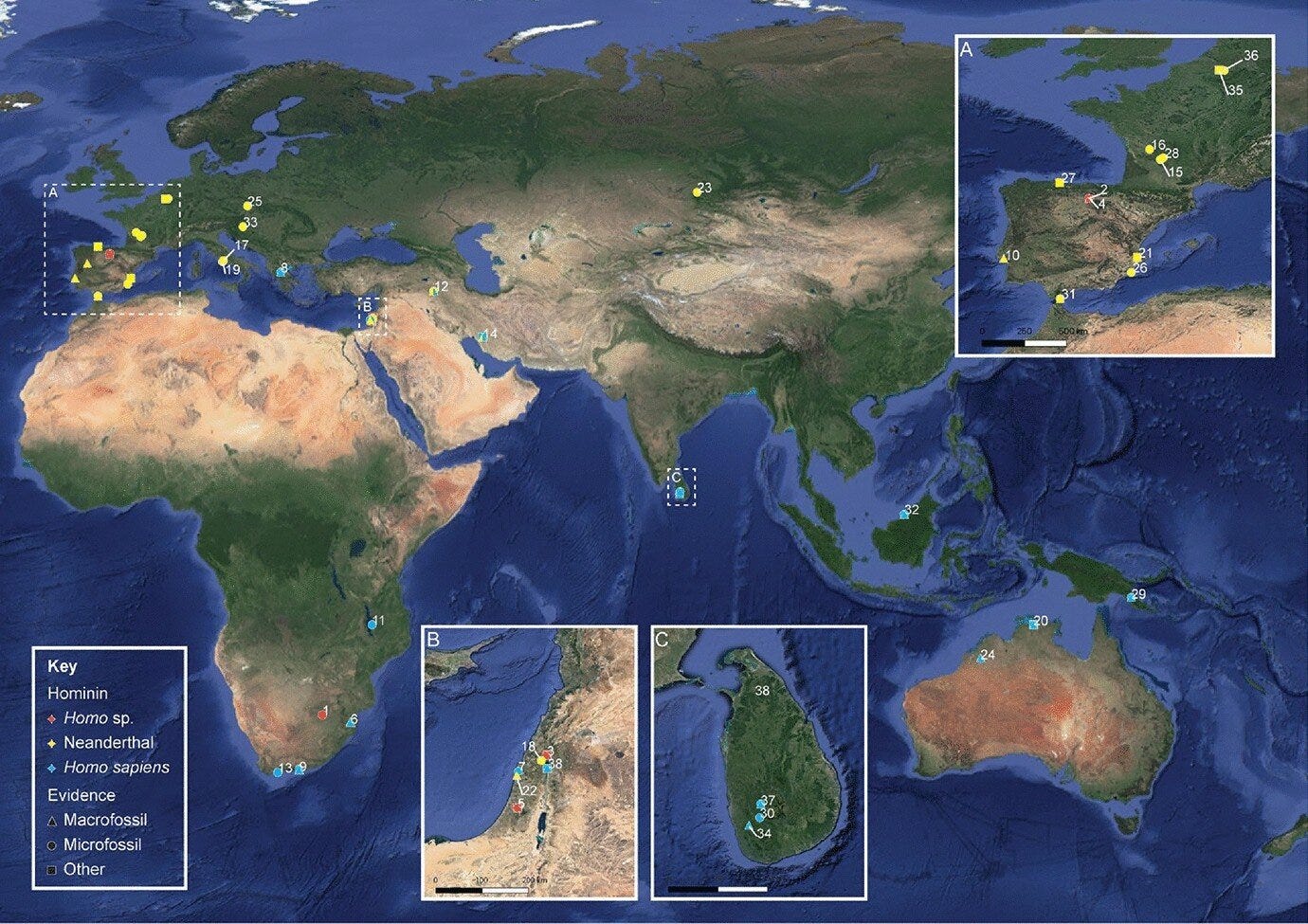
The idea sounds intuitive. Yet it stands in stark contrast to decades of scholarship that treated plants as understudies waiting for the agricultural revolution to pull them onto center stage. The new synthesis challenges that narrative, not with provocation, but with data accumulating across continents and time scales.
“Plant use sits so deeply in hominin history that calling it a ‘shift’ misunderstands the record,” notes Dr. Elena Rossi, a paleoanthropologist at Cambridge University. “In most places, the shift was not toward plants but away from a modern bias that made them hard to see.”


