

The fossil record for early human presence in Southeast Asia is thin. A few teeth. Some skull fragments pulled from river sediments. A disputed date here, a revised date there. Paleoanthropologists have been arguing for decades about when exactly Homo erectus made it into what is now Indonesia, and the honest answer is that we still don’t know with great confidence. Somewhere between 1.3 and 1.8 million years ago is the current range, and that’s a lot of uncertainty for something as consequential as the first humans to reach equatorial island Southeast Asia.
A new study published in Scientific Reports1 approaches that question from a direction nobody would have predicted. Not from fossils. Not from stone tools. From mosquitoes.
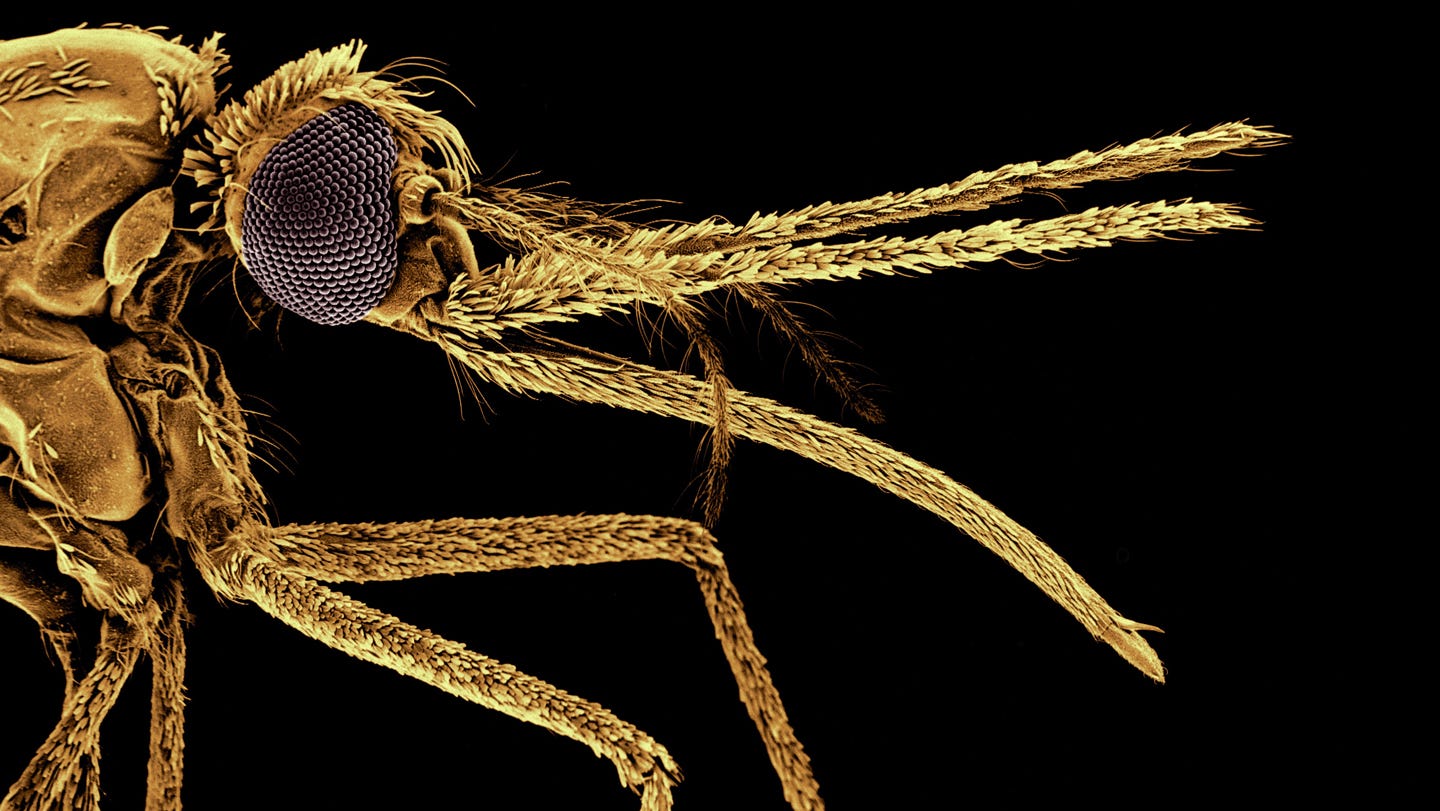
The logic is strange but coherent. Certain Anopheles mosquitoes in Southeast Asia are intensely attracted to humans. Others, their close relatives living in the same forests, feed almost exclusively on monkeys, gibbons, and orangutans in the forest canopy and essentially ignore people on the ground. This split in preference, within a single group of related species, has always needed an explanation. Singh, Walton, and colleagues at the University of Manchester and collaborating institutions decided to build a full genomic phylogeny of the Leucosphyrus Group, the cluster of Anophelesspecies responsible for transmitting malaria across mainland and island Southeast Asia, and figure out when and why the human-feeding behavior evolved.
The answer, depending on how you look at it, is either very satisfying or deeply inconvenient for anyone who thought mosquitoes started caring about us when Homo sapiens showed up. The transition to human-feeding appears to have happened around 1.6 to 2.9 million years ago. Homo sapiens reached the region roughly 63,000 to 76,000 years ago. The arithmetic leaves only one conclusion: the mosquitoes were drawn to hominins long before anatomically modern humans existed.


