

There’s a problem with trying to understand how prehistoric people in northern Poland actually lived. The houses they built were light-framed and didn’t last. The graves they dug mostly contained little more than the bodies themselves. The soils are acidic and sandy — postglacial tills that eat organic material. Traditional archaeology, working with what survives, has largely been limited to pottery shapes, flint tools, and the occasional bronze object. Not a lot to go on.
But bones survive. And bones hold a chemical record of what a person ate across their lifetime, encoded in stable ratios of carbon and nitrogen isotopes. Every meal leaves a trace. The isotopic signature of the food you eat becomes the isotopic signature of your tissues. Cattle grazed on open meadows have different carbon values than cattle grazed under a forest canopy. People who ate a lot of animal protein have different nitrogen signatures than people who subsisted mainly on grain. And a particular grass from central Asia — broomcorn millet (Panicum miliaceum) — leaves an unmistakable chemical fingerprint in anyone who ate it regularly, because it fixes carbon through a different photosynthetic pathway than European C3 crops like wheat.
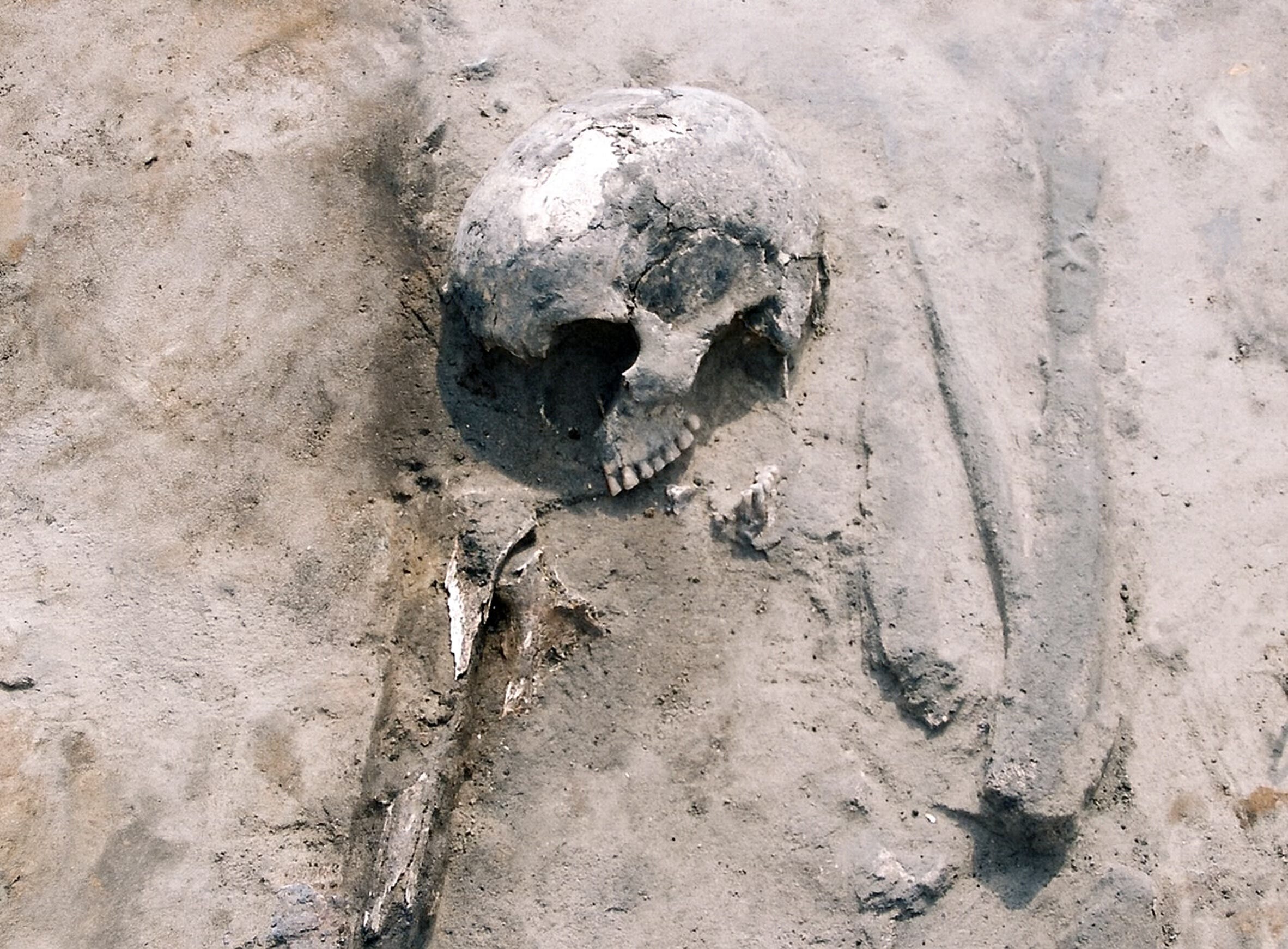
A large international team led by Łukasz Pospieszny recently published a study in Royal Society Open Science1 that used exactly these methods to reconstruct the diets of 84 individuals from Kuyavia, a region in north-central Poland, spanning roughly 4100 to 1230 BC. They combined stable isotope analysis with direct radiocarbon dating of each individual, ancient DNA for sex determination, and isotope measurements of cattle bones and charred cereal grains to build local food web baselines. The result is the most temporally resolved dietary sequence yet produced for this part of Europe, covering more than two and a half millennia of human subsistence without a break.
What they found is not a tidy story of progress. It’s something stranger and more interesting.
The early farmers of Kuyavia — communities associated with the Funnel Beaker culture in the Middle and Late Neolithic — show the dietary signatures you’d expect from people running mixed farming economies: carbon values consistent with C3 cereals like emmer wheat, nitrogen values reflecting moderate animal protein consumption. The cattle isotope data from this period contains a surprise, though. Funnel Beaker cattle have notably lower carbon values than cattle from the preceding Linear Band Pottery culture, which suggests they were grazing under forest cover rather than in the cleared, open fields that LBK farmers tended to prefer. The “canopy effect” depresses plant carbon values in dense woodland, and that signal gets passed up the food chain into the animals.
The Funnel Beaker cattle also have unusually elevated nitrogen values compared to cattle from other periods. The team floated several explanations: grazing on salt meadows (Kuyavia sits above Permian salt deposits and brine springs, and halophytic vegetation near these areas naturally has high nitrogen values), or prolonged penning and corralling, which causes nitrogen enrichment through repeated cycling of animal waste. Either scenario would have been a deliberate management choice. Neither looks like accidental variation. The elevated nitrogen in Funnel Beaker cattle from both the Kujawy Plain and the Żnin Lakeland persists across sites, which makes it hard to explain away as a local quirk.
The charred wheat grains from Late Neolithic Funnel Beaker contexts also had notably high nitrogen values, in the range that researchers associate with intensive manuring — spreading animal dung on crop fields to boost fertility. Earlier Neolithic wheat from the same region shows medium manuring levels. The later Funnel Beaker wheat pushes into the high category. This is not something you can see in the ground. No spade finds manure. But the nitrogen isotopes in ancient grain remember it.


