

There is a grave in southern Sweden, about 7,000 years old, that was officially empty.
No stone tools. No animal teeth. No antler. When archaeologists excavated it in the 1980s and recorded the contents, they logged the skeleton and moved on. The woman interred there was over sixty years old. She had been placed in a crouched position on her right side, her limbs arranged in a way that suggested she had been bound or wrapped with something. But whatever that something was had vanished completely, or so everyone assumed.
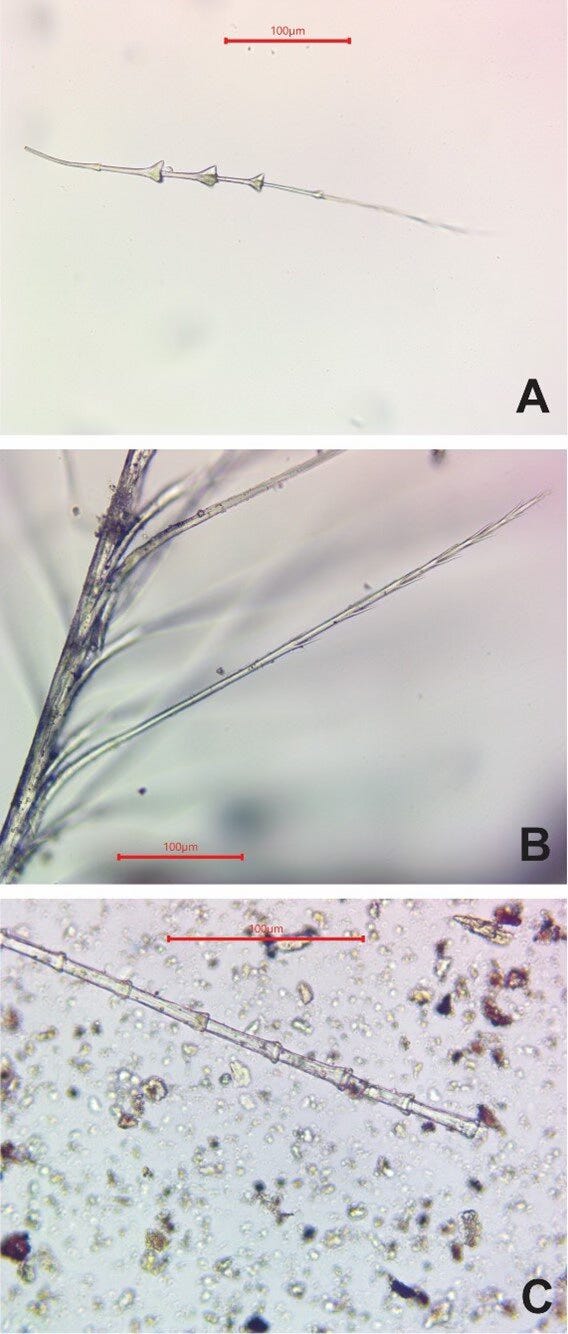
Recent analysis1 of soil samples taken from around her remains tells a different story. Near her right heel: a white guard hair, almost certainly from the winter coat of a least weasel (Mustela nivalis) or stoat (M. erminea) — animals whose pelage turns snow-white in the cold months. Near the same foot: a hair from a brown carnivore, possibly a feline. And somewhere in that zone, fragments of a bird feather. The team’s interpretation is careful but unavoidable: this woman was wearing shoes. Multicolored, composite footwear made from fur and feather or bird skin, the kind of thing you’d need to know how to make, the kind of thing that takes skill and time and probably carries meaning.
The grave wasn’t empty. It was full of things that disappeared.


