

There’s a stretch of southern Argentina where the Pampas stop being themselves. The flat grassland gives way, the climate shifts, and the landscape edges toward something harder and more austere. This transition zone between the Pampas and Patagonia, cut through by the lower Colorado River, is not an obvious place to build a life. But people did, repeatedly, across centuries.
Zoko Andi 1 — ZA1 in the literature — is an archaeological site in that corridor. A team led by Gustavo Martínez1 has spent considerable effort pulling apart what was left there, and the resulting picture is more complicated than a straightforward account of survival.
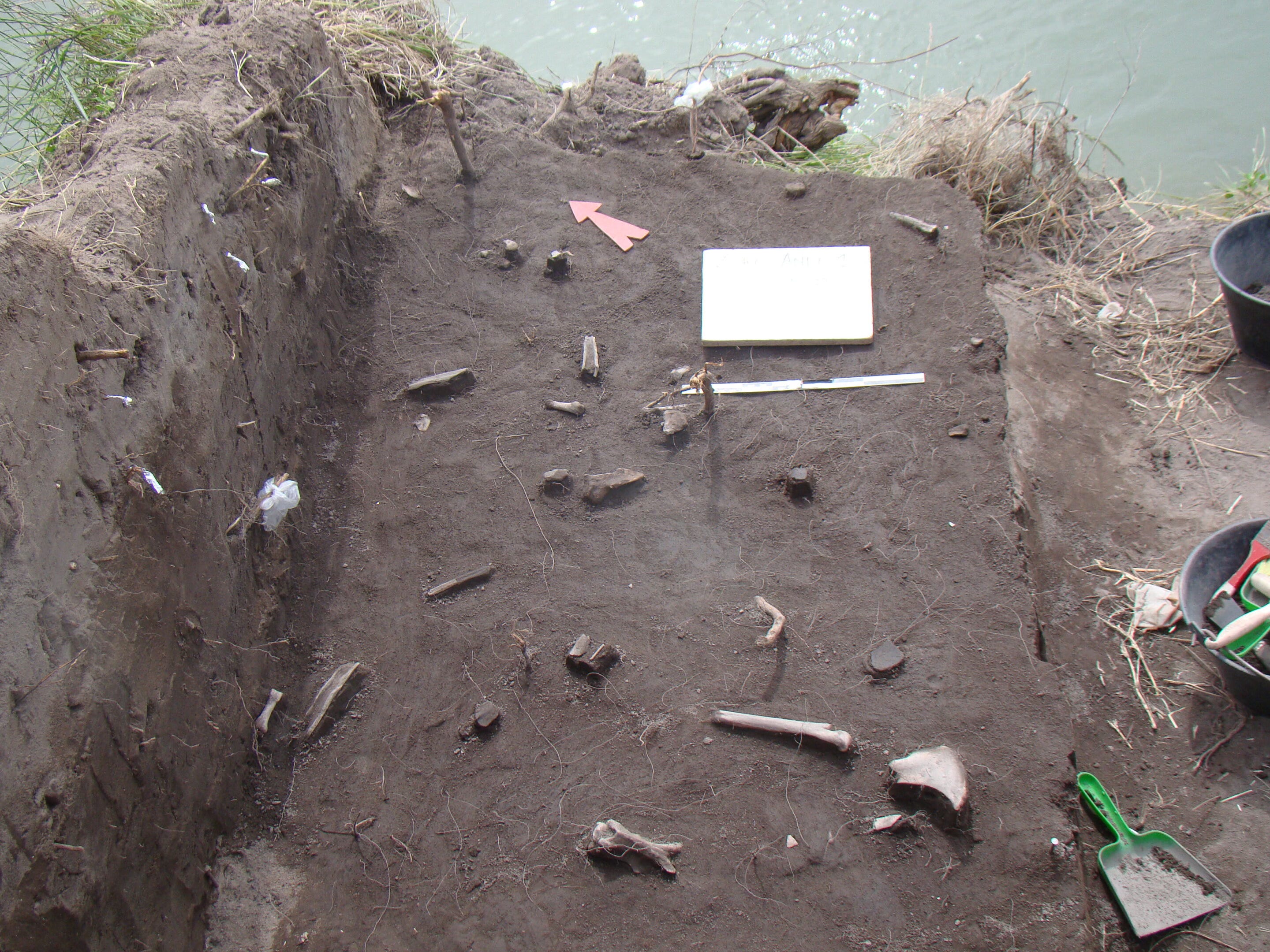
The bones tell part of the story. Faunal remains spanning roughly 1500 to 400 years ago show that the people who occupied ZA1 were not fixated on any single food source. Guanaco dominated their diet, as it did across most of the southern cone during this period. But the team found evidence of something more than casual hunting. The processing was intensive: marrow extraction, bone grease rendering, systematic use of an animal down to what the skeleton could still give after the meat was gone. This wasn’t opportunistic. It was a strategy.
Alongside the guanaco remains were cut-marked bones from armadillos, birds, and large rodents. Not a handful of bones from a single episode, but a consistent pattern across different layers of occupation. These smaller animals weren’t fallback food for lean seasons. They were, apparently, a regular part of the diet throughout the site’s use.


