

Stela 46 is not much to look at. The limestone is badly weathered, the surface crumbling in the soft, friable way typical of the Campeche region. When researchers first photographed it under raking light decades ago, large sections were illegible. A scholar in 1991 noticed the traces of an 8 bak’tun glyph and flagged the monument as potentially significant, but without a legible date, there wasn’t much to say. The stela sat in storage at the INAH center in Campeche City.
What changed was the technology. In 2025, a team led by Kenichiro Tsukamoto of the University of California, Riverside, ran a high-resolution 3D scanner — an Artec Spider II, accurate to a tenth of a millimeter — glyph by glyph across the face of Stela 46.1 The device has its own lighting system, eliminating the shadows and flares that had made traditional raking-light photography so unreliable on badly eroded surfaces. Software then allowed the team to illuminate the resulting digital models from dozens of angles simultaneously, revealing the faint contours of carved numerals that centuries of weathering had nearly erased.
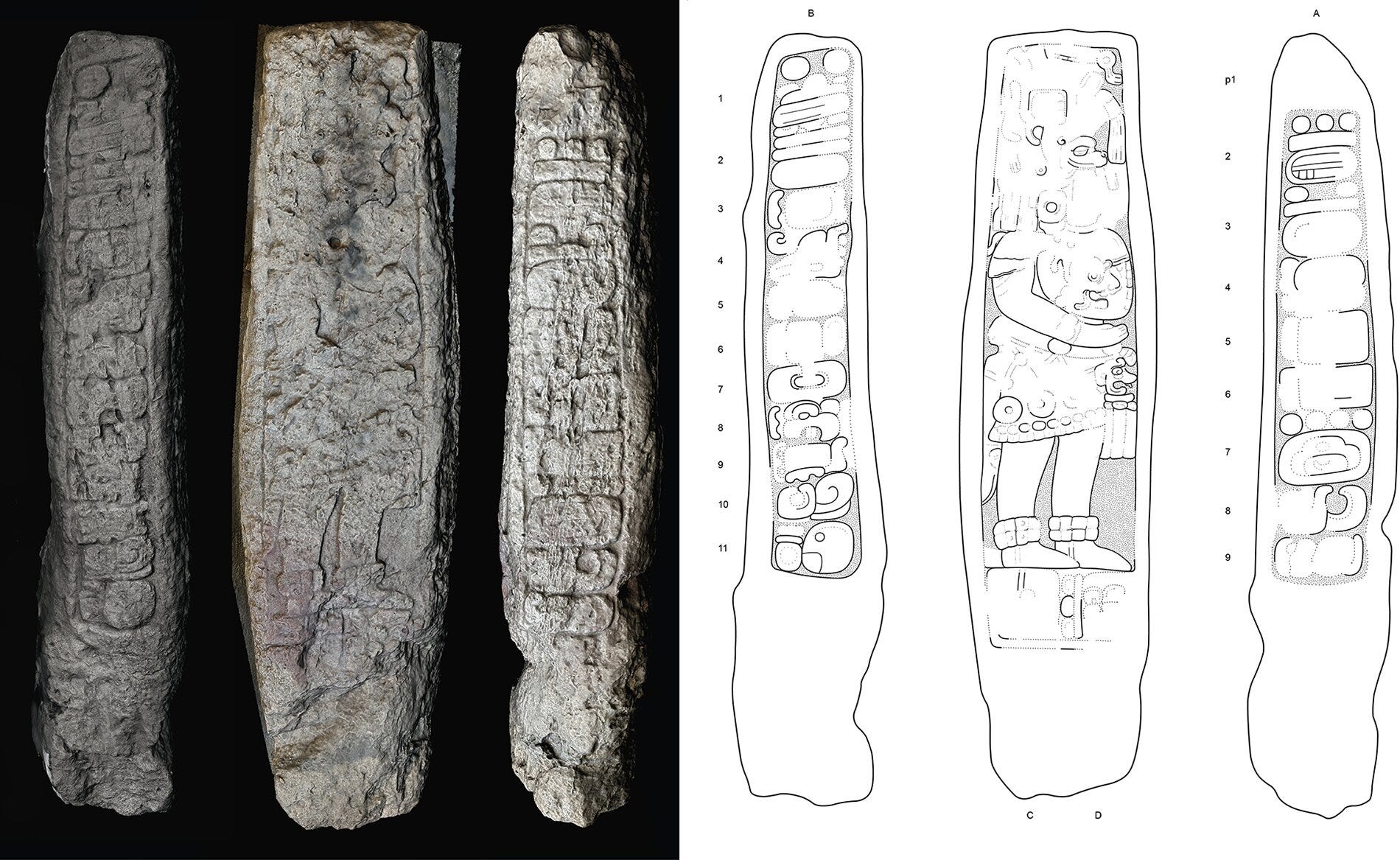
What emerged was a Long Count date: 8.7.1.0.0, corresponding to August 31, A.D. 180 in the Gregorian calendar.
That date is currently the earliest known Long Count in the Maya lowlands. It pushes the record back by more than 112 years from the previous holder, Stela 29 at Tikal, which dates to A.D. 292. But the bare chronological priority is almost the least interesting thing about it.


