

There’s a particular challenge in trying to understand gender in prehistoric societies. You can’t ask anyone. You’re working from what survives: bones, objects placed in graves, the position of a body in the earth. Each of these things encodes behavior, or social expectation, or sometimes both. Separating them is the hard part.
A study published in February 2026 in the American Journal of Biological Anthropology1 takes one of the more careful approaches to this problem I’ve seen. A team led by Sébastien Villotte examined 125 adult skeletons from two sites in eastern Hungary, both of them Neolithic, both within a few kilometers of each other, and found something that’s genuinely strange: the two communities were apparently quite different in how gender was expressed, both in how their dead were buried and in what their skeletons show about their living.
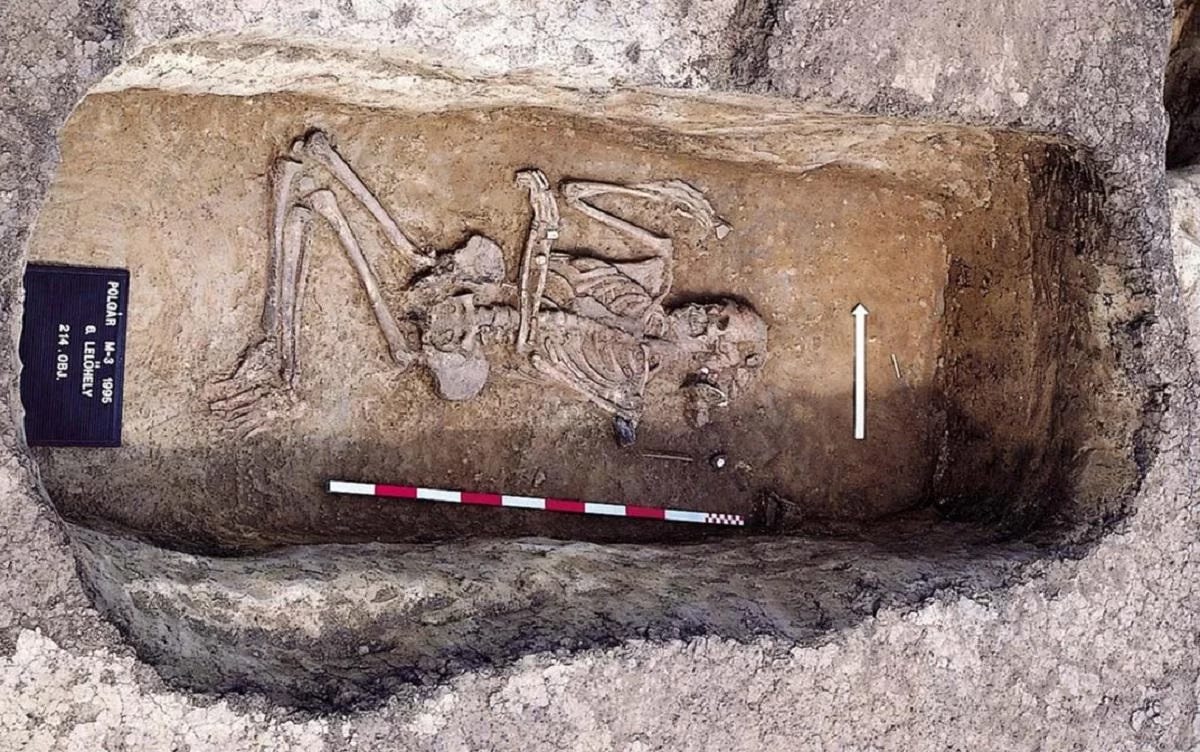
The two sites are Polgár-Ferenci-hát, dating to roughly 5300-5070 BCE, and Polgár-Csőszhalom, dating to 4800-4650 BCE. Four kilometers apart. Probably genetically related, based on ancient DNA analysis suggesting that the later Csőszhalom population descended directly from the earlier Ferenci-hát community with little outside gene flow. Same landscape, similar ancestry, broadly similar period. And yet, when it comes to how these people organized their social lives around sex and gender, the picture is notably different between the two.
That’s what makes this study worth paying attention to. The comparison is almost experimental in its logic. Hold the environment constant, hold the genetic background roughly constant, and look at what varies.


