

The board beneath the floor
In the low, humid forests of northern Petén, the Maya city of Naachtun once stood between two giants, Tikal and Calakmul. Its plazas and residential compounds were shaped by dynastic ambition, political tension, and the daily work of building a city from limestone and lime plaster. During excavations in 2023, archaeologists working in a residential complex known as Group 6L13 uncovered something quietly extraordinary:1 a board for patolli, the Mesoamerican game of chance and strategy, laid into a plaster floor as a ceramic mosaic.
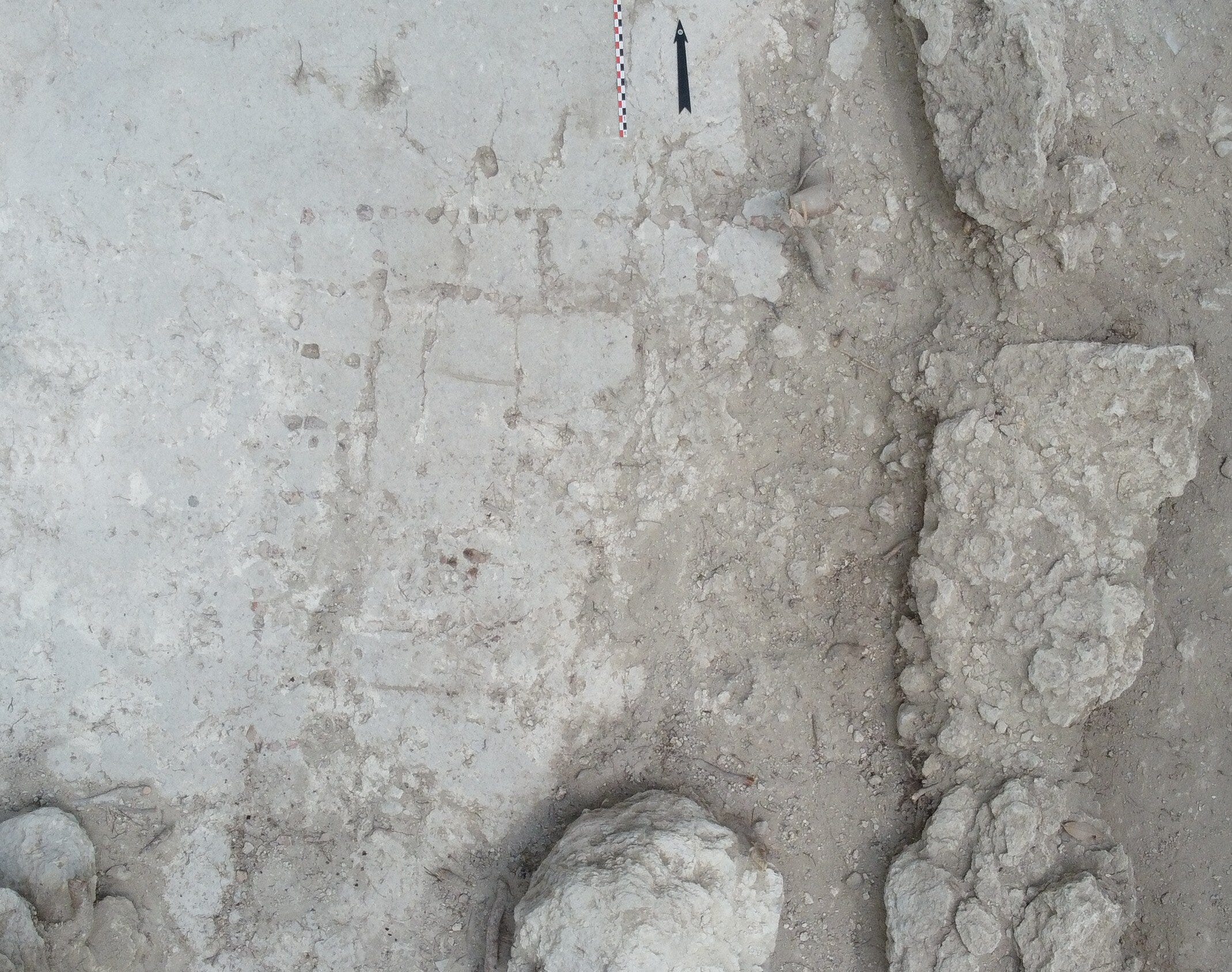
At first glance, it looks like a pattern of red fragments set into white plaster. Look longer and the geometry emerges. A rectangular frame encloses a cross of squares, the familiar layout of patolli boards known from scratched floors, benches, and stone monuments across the Maya Lowlands. But this one was not scratched or painted after the fact. It was planned, constructed, and sealed into the architecture itself.
That difference matters. It changes how archaeologists can date the board, how they think about who played on it, and what role games may have had in Classic Maya social life.


