

For decades, the Iberian Peninsula has sat at the center of a stubborn puzzle in human evolution. It was one of the last refuges of Neanderthals, yet also one of the gateways through which Homo sapiens spread into western Europe. Archaeology hints at overlap. Genetics whispers of ancient encounters elsewhere on the continent. But Iberia itself remains frustratingly ambiguous.
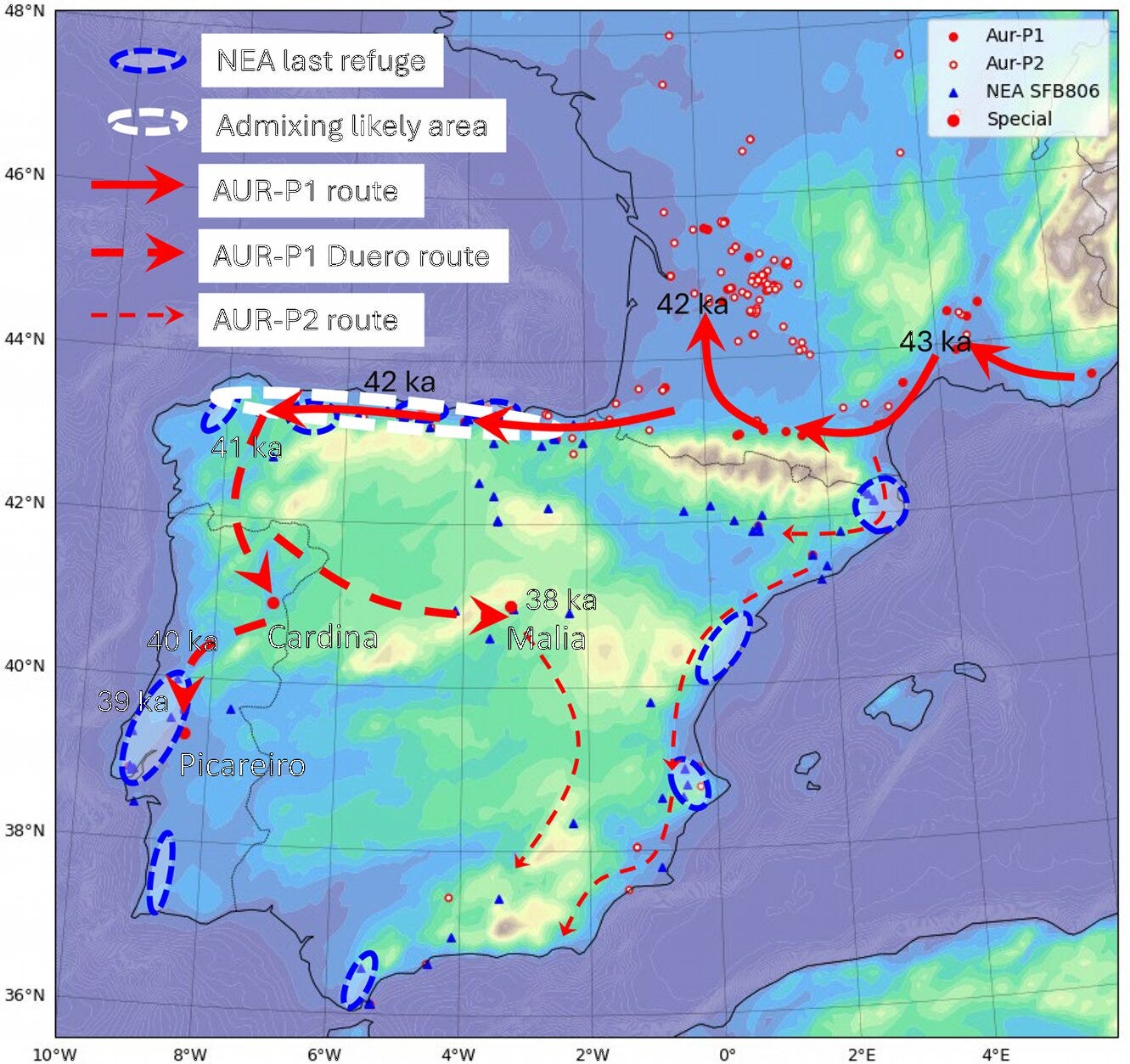
Now, a new study published in PLOS One1 approaches the problem from an unusual angle. Instead of bones or stone tools, it uses dynamic computer simulations to ask a deceptively simple question: under what conditions would Neanderthals and modern humans have actually met in Iberia?
The answer is not dramatic contact or inevitable blending. It is something subtler, and perhaps more unsettling. Most of the time, the two populations pass like ships in the night, separated not only by geography but by timing, climate, and fragile demography.


