

The bones that changed the map
On the coast of southern Brazil, long before harbors, charts, or iron hooks, people were already facing the open sea with intent.
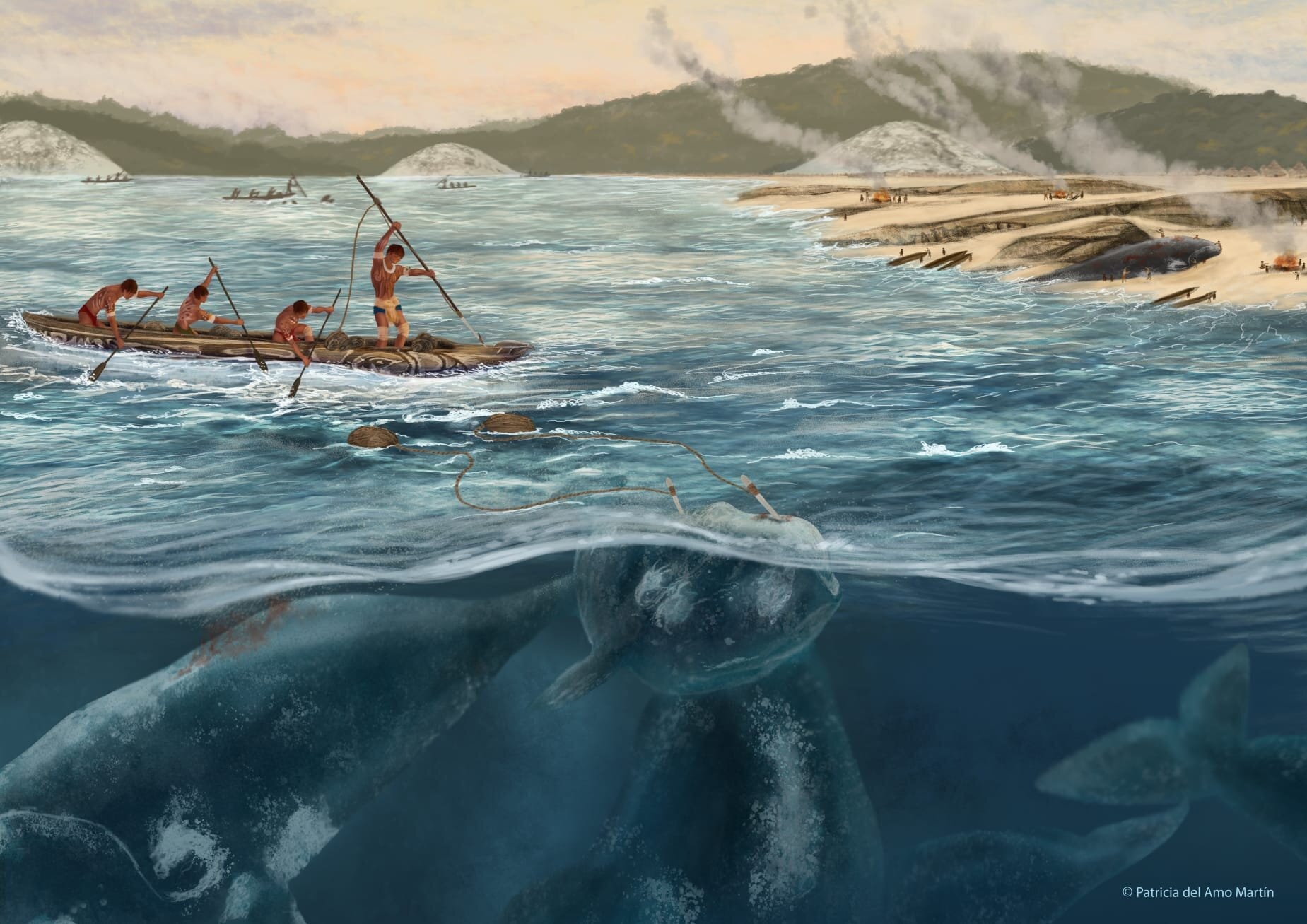
New research published in Nature Communications1 shows that Indigenous communities living around Babitonga Bay were hunting large whales at least 5,000 years ago. That is a full millennium earlier than the oldest known evidence from the Arctic and North Pacific. The finding shifts the geography of early whaling southward and asks us to rethink where complex maritime traditions first took shape.
These hunters left no written records. What remains are bones, tools, and shell mounds rising quietly from the coastal plain. And now, those remains are speaking with surprising clarity.


