

Tattoos that survived when skin did not
For more than a century, archaeologists working in Nubia have known that tattooing was part of life along the Nile. The evidence, however, was fragmentary. Faded marks on mummified skin. Fleeting references in colonial-era excavation reports. A sense that tattooing existed, but only at the margins of what could be documented.
That picture has now changed.
By applying multispectral imaging to human remains from Sudan and southern Egypt, researchers have identified tattoos that were invisible to the naked eye for centuries. Infrared and near-infrared wavelengths, capable of penetrating darkened and degraded skin, revealed patterns that ordinary light could not. The results include something few expected to see. Tattoos on infants. In some cases, on children barely old enough to walk.
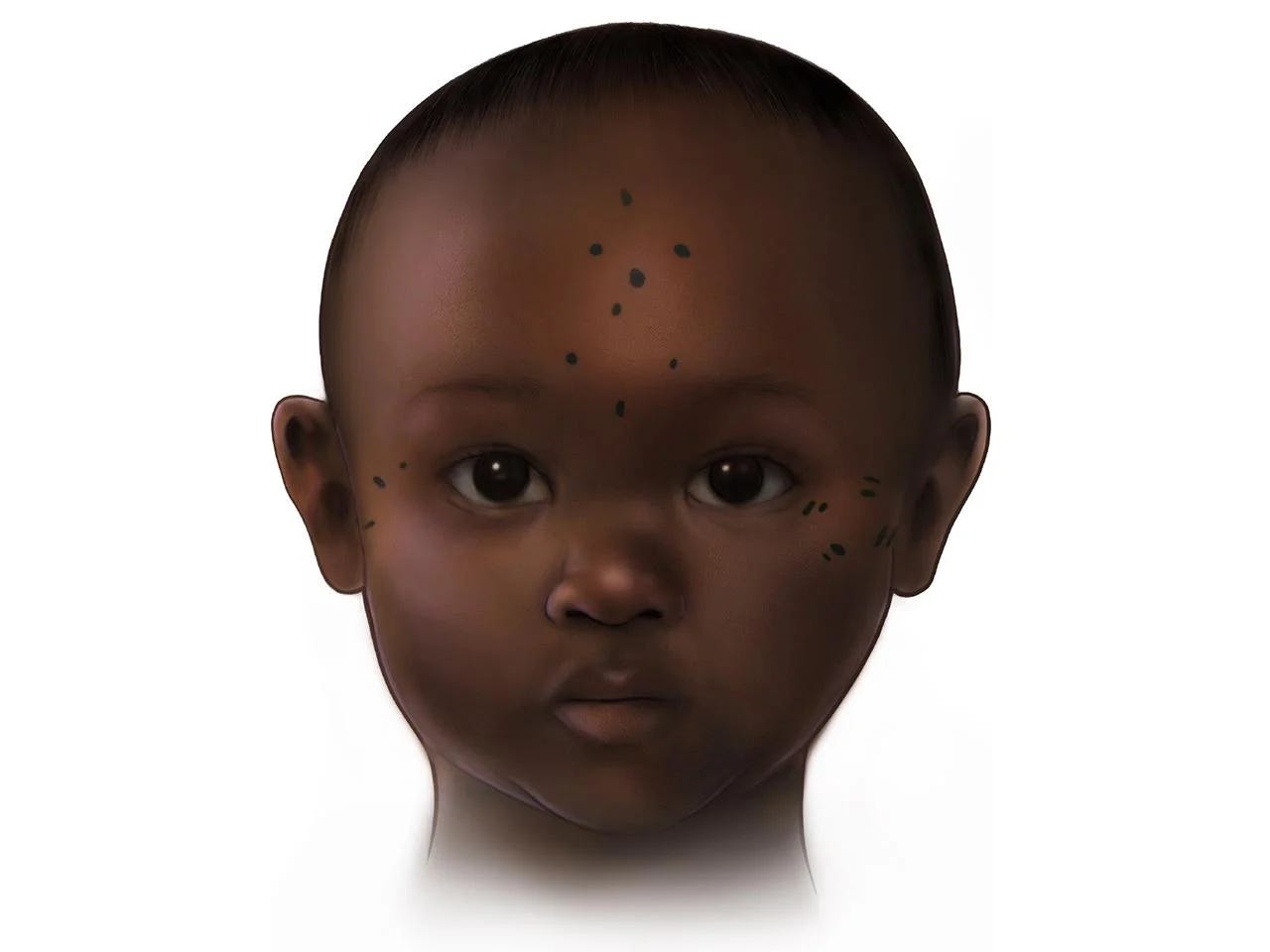
The study,1 led by Anne Austin and colleagues, examined more than a thousand individuals from three sites spanning nearly 1,800 years of Nubian history. From that vast sample, 27 tattooed individuals were identified, almost doubling the known corpus from the region. Among them were an infant under one year old and a toddler around 18 months of age.
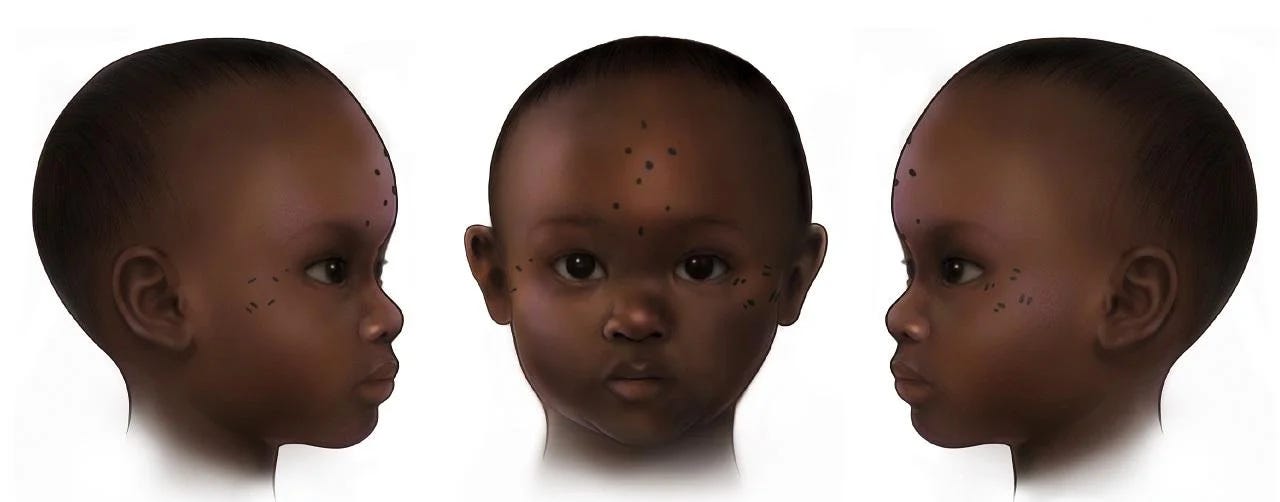
The discovery forces archaeologists to confront a difficult question. Why were bodies being marked before memory, before consent, before adulthood had even begun?


