

A fossil where no one expected it
For decades, the Afar region of Ethiopia has been one of paleoanthropology’s most productive landscapes. Fossils of Ardipithecus, Australopithecus, and early Homo have emerged from its sediments in remarkable abundance. One lineage, however, always seemed to be missing.
That absence has now ended.
In a paper published in Nature,1 Zeresenay Alemseged and colleagues describe a 2.6-million-year-old partial jaw from Afar that belongs to Paranthropus. It is the first time this robust hominin has been documented in the region, more than 1,000 kilometers north of its previously known range.
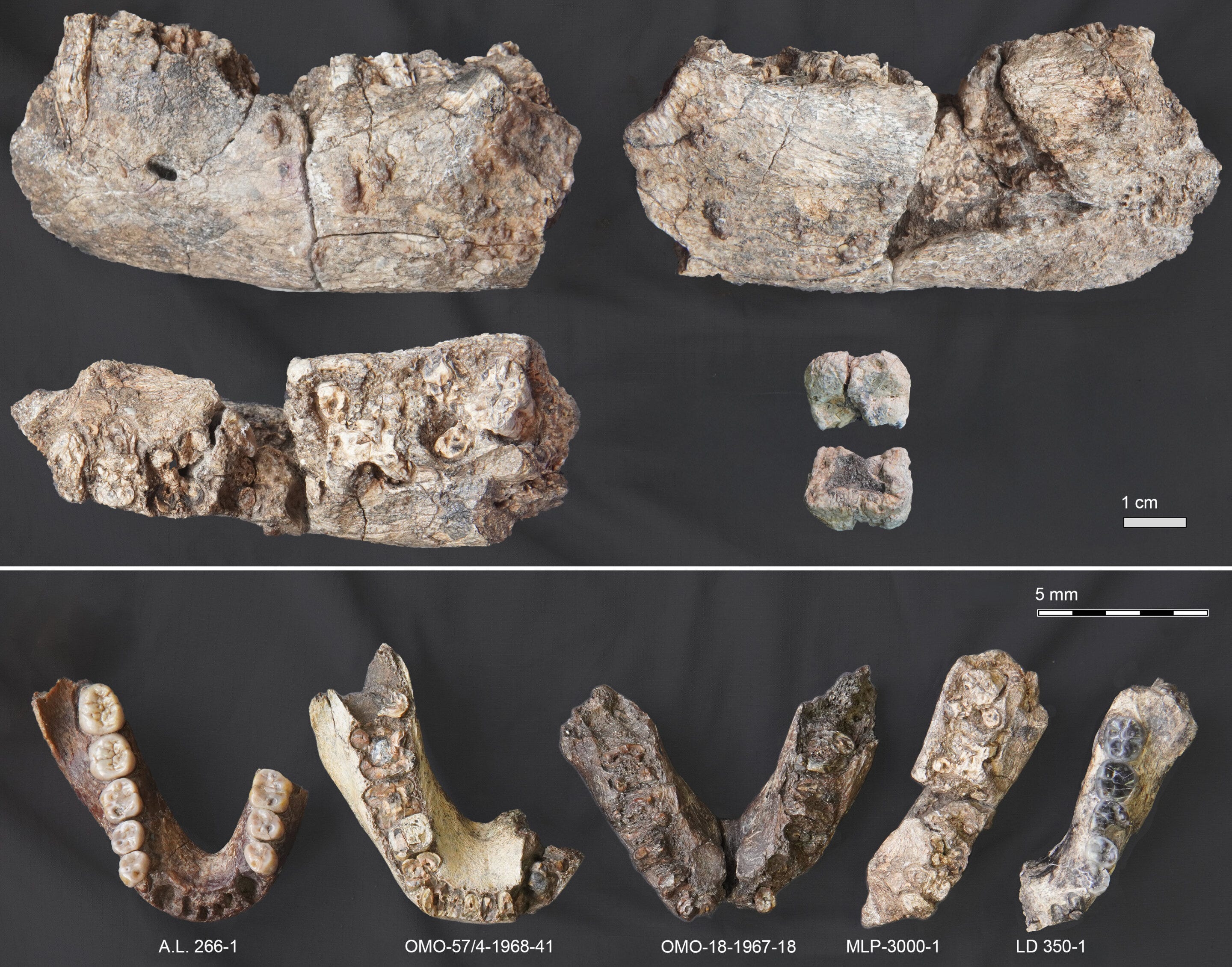
What looks at first like a simple extension of a map turns out to be something deeper. The fossil suggests that Paranthropus was not a marginal specialist clinging to ecological edges, but a versatile and widespread hominin that shared landscapes with our own ancestors.
“This discovery is so much more than a simple snapshot of Paranthropus’ occurrence. It sheds fresh light on the driving forces behind the evolution of the genus.”
— Zeresenay Alemseged


