

A Childhood Virus With a Long Memory
Nearly everyone encounters human herpesvirus 6B early in life. It spreads quickly, often causing roseola, a mild childhood illness that many parents barely remember once it passes. After that first infection, the virus settles in for the long haul, remaining dormant in the body for decades.
Its close relative, HHV-6A, behaves in similar ways. Together, they belong to a group of herpesviruses that are defined by persistence. Once infected, always infected.
What makes these viruses unusual is not just their staying power. In rare cases, they integrate directly into human chromosomes. When this happens in reproductive cells, the virus can be inherited by the next generation as part of the genome of Homo sapiens. About one percent of people alive today carry such viral sequences in every cell of their body.
Until now, this deep integration was inferred from modern genetics. Direct evidence from the past was missing.
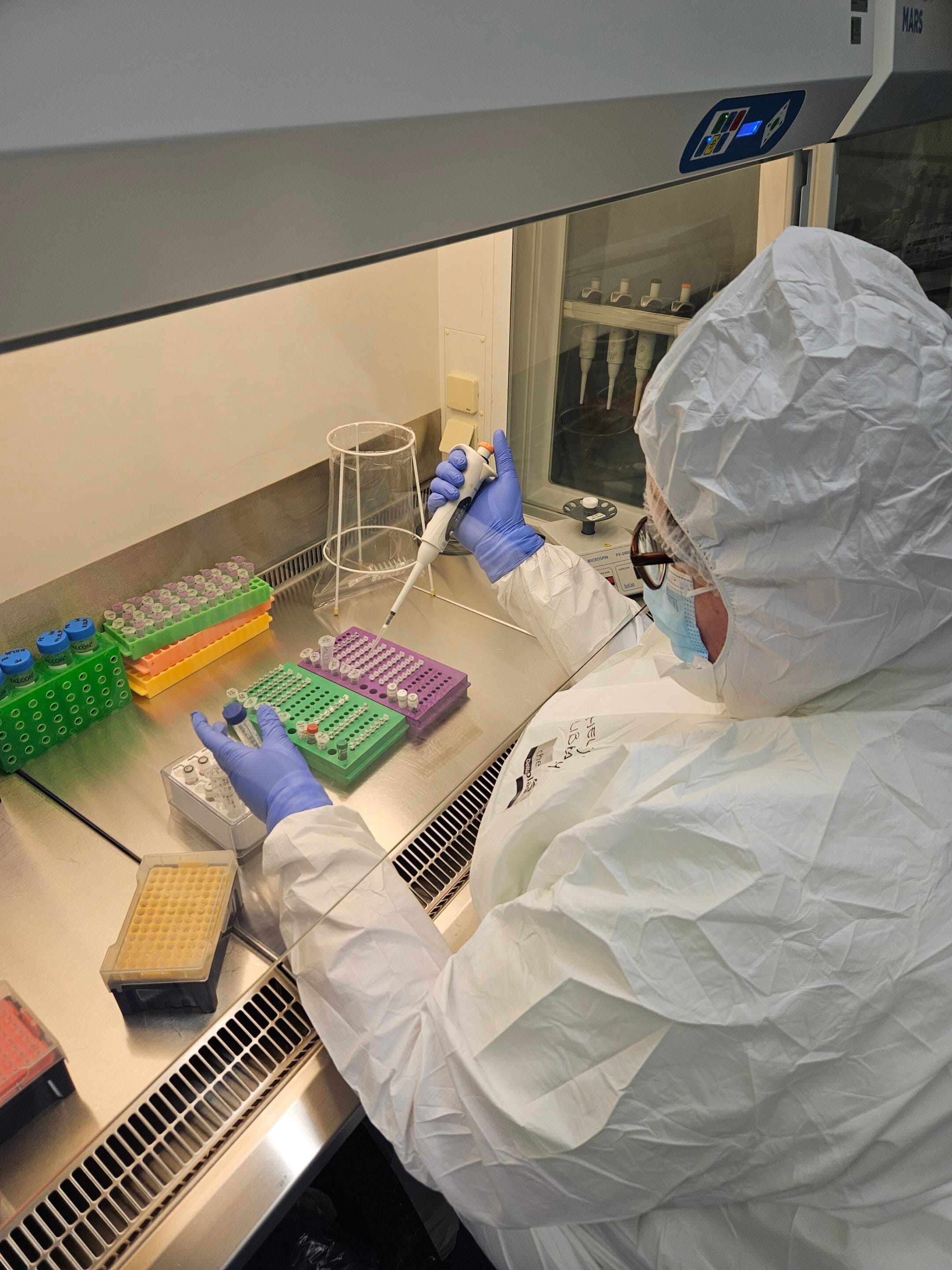
Reading Viruses From Ancient Bones
That gap has now closed. In a study published in Science Advances,1 an international research team screened nearly 4,000 archaeological human remains from across Europe. From this vast collection, they reconstructed eleven ancient genomes of HHV-6A and HHV-6B.
The oldest came from Iron Age Italy, dating between 1100 and 600 BCE. Others appeared in medieval England, Belgium, Estonia, and early historic Russia. In several cases, the viral DNA was inherited rather than acquired through infection, making these individuals the earliest known carriers of chromosomally integrated herpesviruses.
Meriam Guellil, the study’s lead author, explained the challenge:
“While HHV-6 infects almost 90% of the human population at some point in their life, only around 1% carry the virus, which was inherited from your parents, in all cells of their body. These 1% of cases are what we are most likely to identify using ancient DNA.”
The rarity of these integrations makes their discovery in ancient remains especially striking.


