

The Colchian lowlands of western Georgia are not an easy place to live. Rain is frequent. Rivers swell with seasonal meltwater. The ground itself shifts and softens, alternately marshy and unstable. Yet for more than a millennium, Bronze Age communities chose to stay. They did not simply endure the landscape. They engineered it.
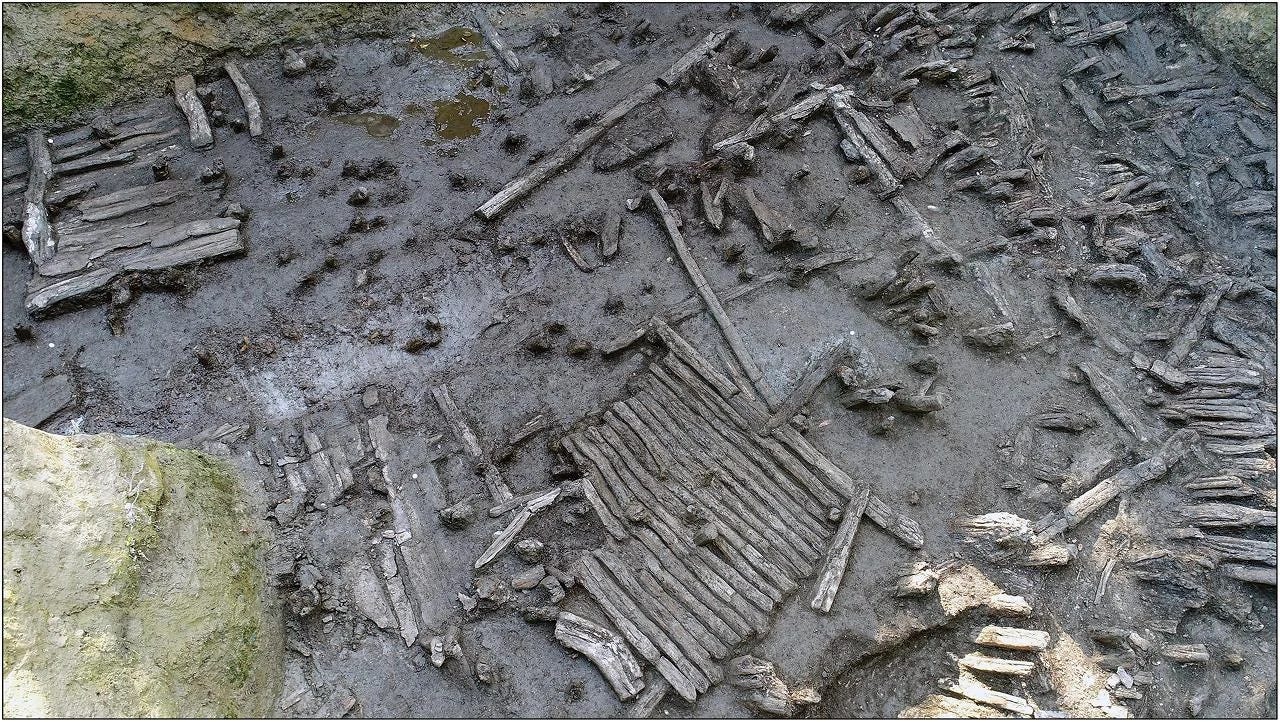
At Tabakoni, a modest settlement mound tucked into this wet terrain, archaeologists have finally pinned human activity to a precise timeline. By combining radiocarbon dating with dendrochronology on exceptionally preserved wooden architecture, researchers have transformed a blurry regional sequence into a finely resolved narrative1 of construction, abandonment, return, and adaptation.
The result is not just a new site chronology. It is a deeper look at how Bronze Age societies in the eastern Black Sea world organized labor, food production, and architecture in dialogue with a difficult environment.


