

Bones look inert. In museum drawers and fossil casts, they appear as rigid leftovers, the hard scaffolding that survives long after muscle, tendon, and skin have vanished. But in life, bone is restless tissue. It senses, reacts, adapts. Every step, every leap, every sustained posture sends signals through a living lattice that is constantly being rebuilt.
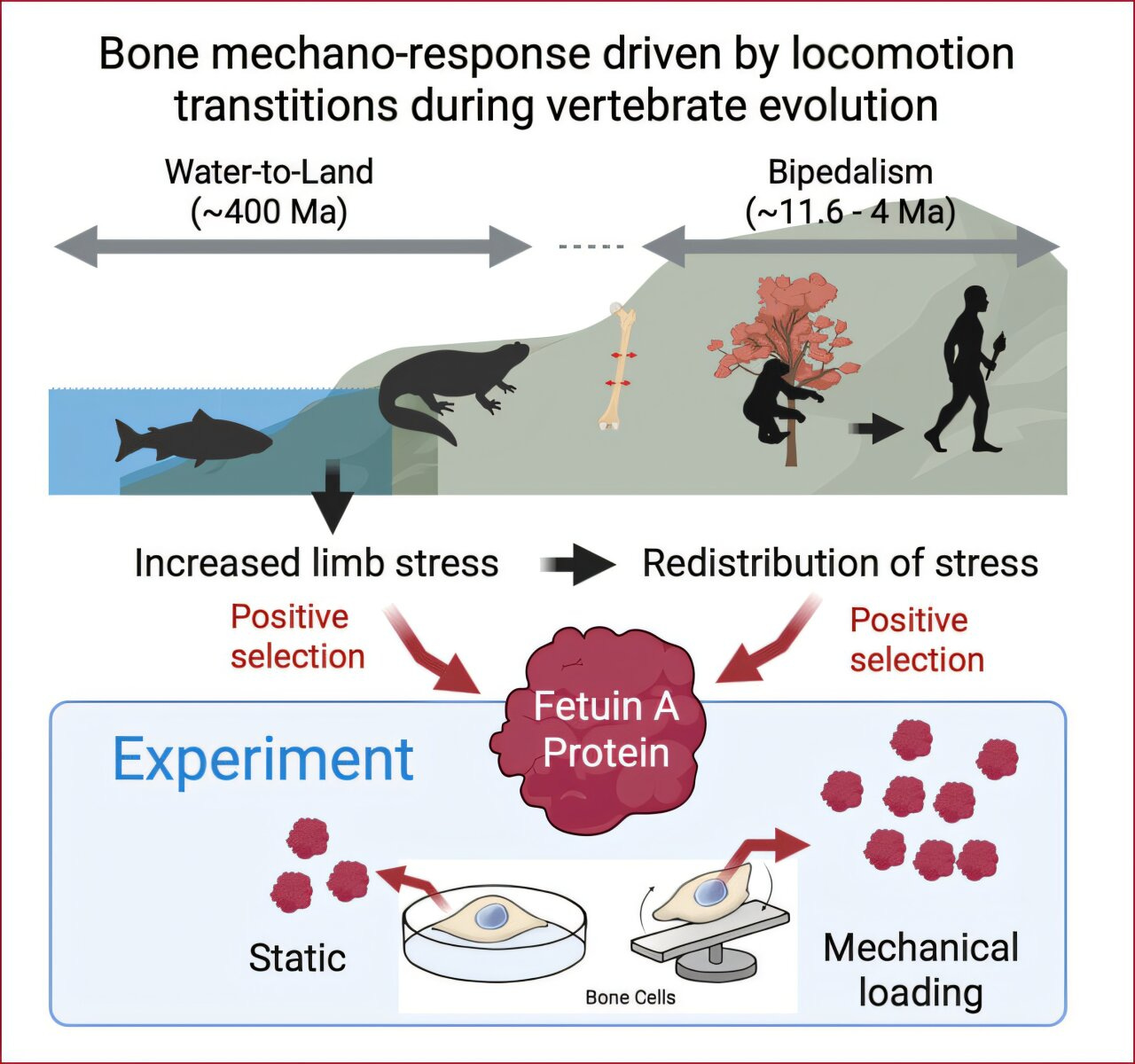
A new study in Communications Biology1 argues that this sensitivity is not just a matter of physics. It is also a deep evolutionary story. According to the research, transitions in how animals move have left molecular fingerprints inside bone itself, shaping which proteins regulate how skeletons grow stronger, thinner, or more fragile over time. Locomotion, the authors suggest, has been quietly rewriting the rules of bone biology for hundreds of millions of years.


