

High above the rolling countryside of County Wicklow, a hill once hummed with life on a scale few archaeologists expected to find in prehistoric Ireland. Not a lone ringfort. Not a handful of roundhouses. But hundreds of homes clustered together, arranged with intention, persistence, and care.
Recent research1 at Brusselstown Ring suggests that, more than three thousand years ago, people in Ireland were experimenting with a kind of living that looks surprisingly like a neighborhood. Dense. Organized. Shared.
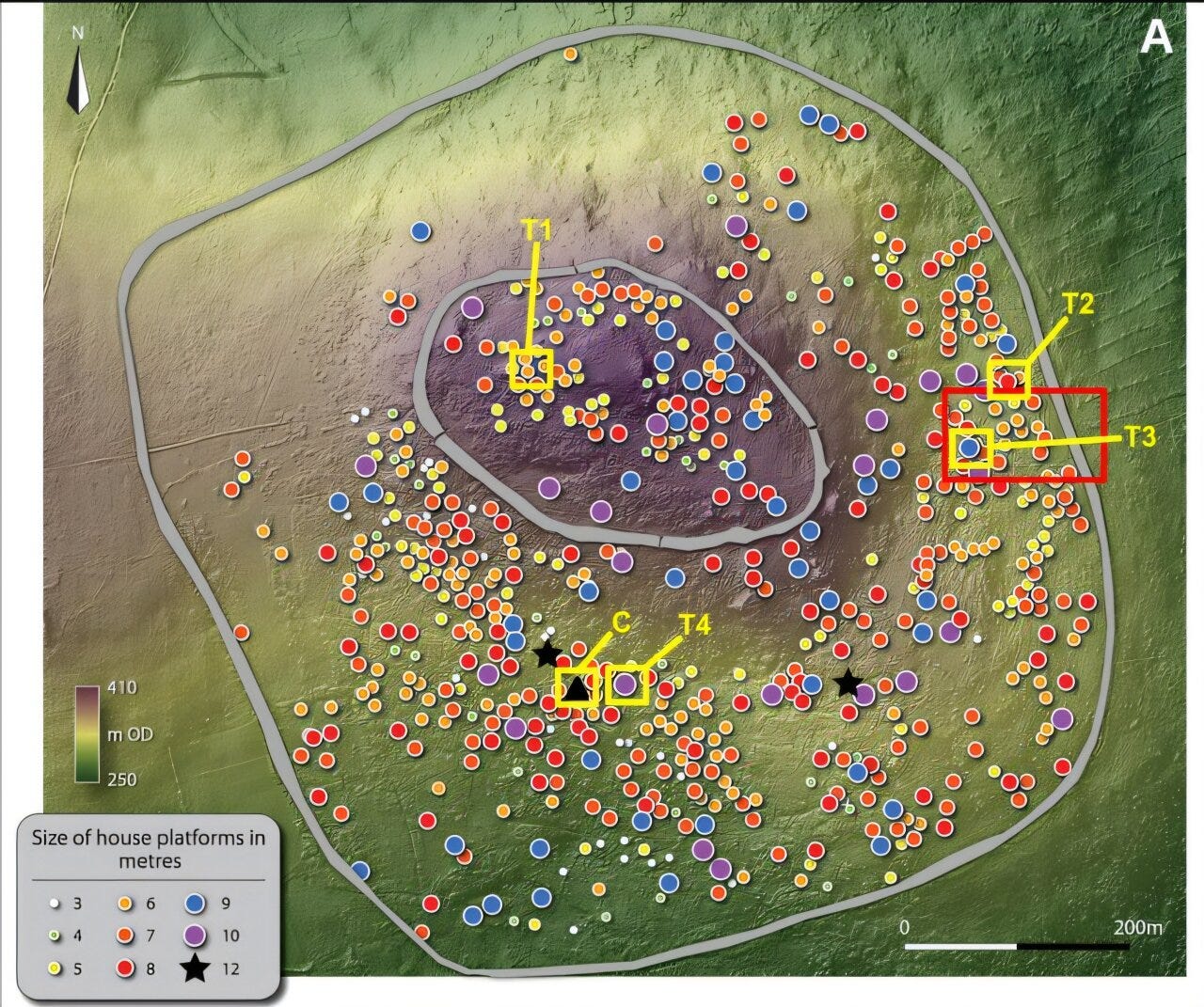
The discovery does more than add a new dot to the archaeological map. It unsettles long-standing assumptions about how many people lived together in Atlantic Europe during the Late Bronze Age and how deliberately they shaped their landscapes.


